
Orthognathic Surgery
Orthognathic surgery is a surgical treatment used to reposition the upper jaw, lower jaw or both jaws when there is a skeletal discrepancy. It is commonly planned together with orthodontic treatment. The aim is not only to align the teeth, but also to evaluate the bite, the relationship between the jaws and facial balance according to the individual treatment goals.
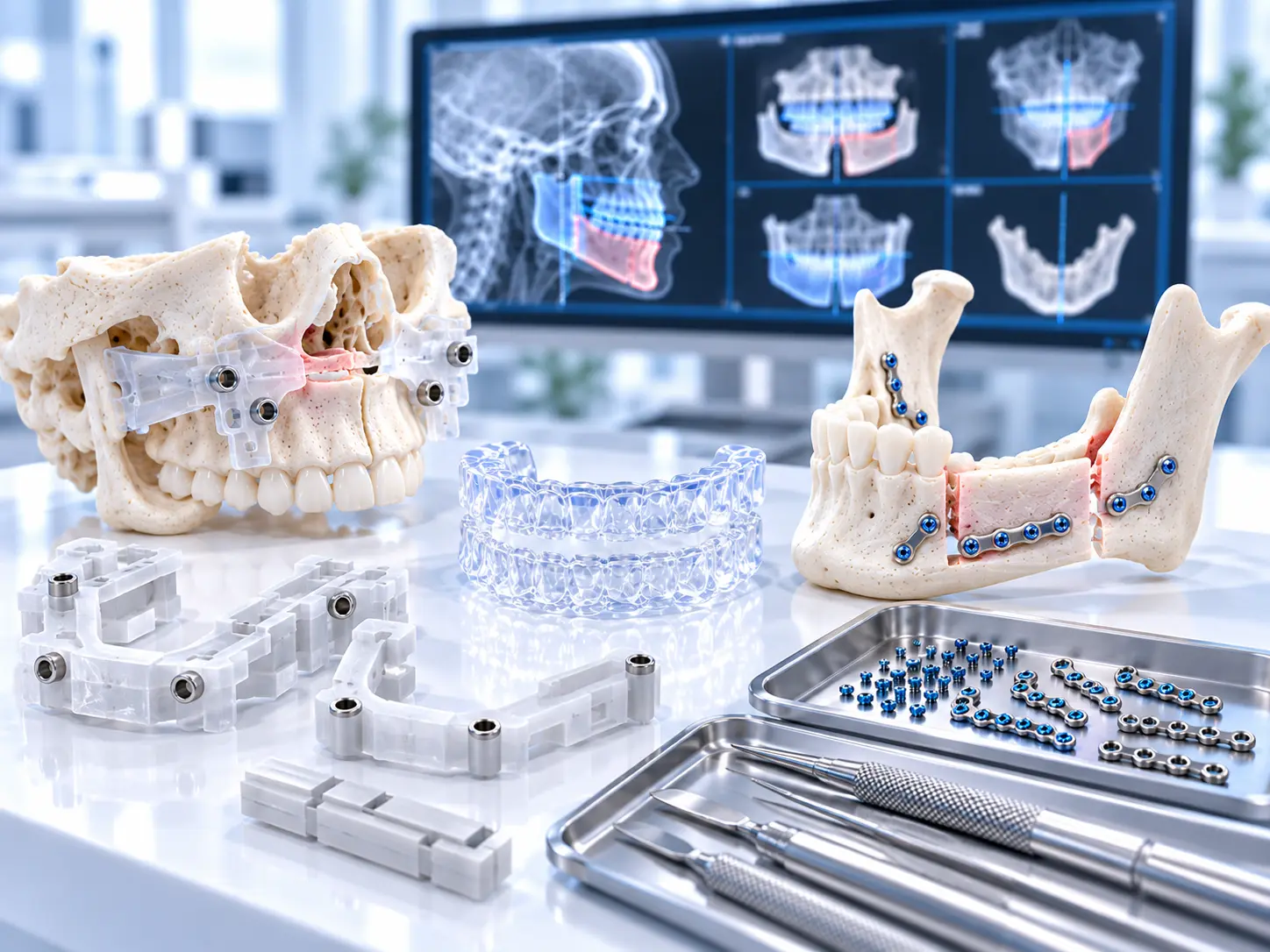
What is orthognathic surgery?
Orthognathic surgery is considered for skeletal jaw problems that cannot be adequately corrected by orthodontic methods such as braces or clear aligners, which primarily move the teeth within the jaw bones.
The operation is performed by an oral and maxillofacial surgeon in a hospital setting, while the positioning of the teeth before and after surgery is managed through orthodontic planning.
Treatment is not limited to a single surgical procedure. Diagnostic records, joint planning, pre-surgical orthodontics, the operation itself, healing and post-surgical orthodontic refinement are complementary stages of the overall process.
The same jaw movement or treatment sequence is not used for every patient.

When may orthognathic surgery be considered?
Surgical orthodontic treatment may be considered in suitable patients with skeletal and functional conditions such as:
- A lower jaw that is positioned significantly ahead of or behind the upper jaw
- Underdevelopment or positional discrepancy of the upper jaw
- Significant open bite, deep bite or crossbite
- Skeletal asymmetry of the face and jaws
- Significant jaw relationship problems affecting chewing or biting
- Situations in which the teeth cannot be brought into an appropriate bite through orthodontic tooth movement alone
- Certain developmental, congenital or post-traumatic jaw deformities
The presence of one of these findings does not automatically mean that surgery is required.
The extent of the problem, the patient’s expectations, general health and the results that may be achieved with non-surgical alternatives are considered together.
When may braces alone not be sufficient?
Orthodontic treatment can move the teeth within the jaw bones, but in a person whose growth is complete it cannot fully change the skeletal position of the jaws.
Some mild or moderate discrepancies may be managed by changing tooth positions through orthodontic camouflage. In more significant skeletal discrepancies, however, tooth movement alone may not be sufficient to create a functional and balanced bite.
Orthodontic camouflage and surgical orthodontic treatment do not have identical treatment goals.
Whether camouflage is appropriate depends on the existing tooth positions, bone and periodontal limits, facial balance and bite requirements.
Camouflage is not possible for every surgical candidate, just as surgery is not required for every skeletal discrepancy.
Who is involved in the treatment team?
Orthognathic treatment requires close cooperation between the orthodontist and the oral and maxillofacial surgeon.
The orthodontist plans the position of the teeth before and after surgery, while the surgeon plans and performs the surgical procedure on the jaw bones and manages the hospital-based surgical care and follow-up.
Depending on the individual patient’s needs, anaesthesia, radiology, dietetics, speech therapy, psychological support or other medical and dental disciplines may also become involved.
The final surgical decision, the extent of the operation and surgical consent are evaluated in detail by the surgical team.
How is orthognathic surgery planned?
The first stage involves reviewing the patient’s concerns, expectations, health history and any previous treatment.
Facial proportions, jaw relationships, tooth alignment, bite and temporomandibular joint findings are examined clinically.
Intraoral and facial photographs, digital scans or models and appropriate radiographic or three-dimensional records may be obtained.
The orthodontist and surgeon use these records to plan the possible direction of jaw movements, the orthodontic preparation of the teeth and the overall sequence of treatment.
Digital surgical planning and surgical guides may be used in selected cases.
During planning, possible functional changes, potential changes in facial appearance and the limitations of treatment should also be discussed with the patient.

Does growth need to be complete before surgery?
For developmental jaw discrepancies, orthognathic surgery is generally planned after facial and jaw growth is largely complete.
Continued growth may alter the jaw relationship achieved through surgery, so chronological age alone is not sufficient for deciding the timing of treatment.
Growth status may be assessed through clinical follow-up and appropriate radiographic records.
Different timing may be considered in special circumstances such as congenital conditions, trauma or significant functional needs.
The most appropriate timing for surgery is determined individually by the orthodontist and surgeon.
Why is orthodontic treatment carried out before surgery?
When a jaw discrepancy is present, the teeth may gradually tilt or change position in an attempt to compensate for the underlying skeletal relationship.
The purpose of pre-surgical orthodontic treatment is to prepare the teeth so that they can meet appropriately once the jaws have been repositioned.
During this preparation, the bite may temporarily appear more mismatched.
This occurs because the dental compensations are being removed and the underlying skeletal relationship becomes more apparent.
It is important for the patient to understand this phase and the temporary changes that may occur before treatment begins.
The duration of pre-surgical orthodontics varies according to tooth position and the planned surgical procedure.
What procedures may be used in orthognathic surgery?
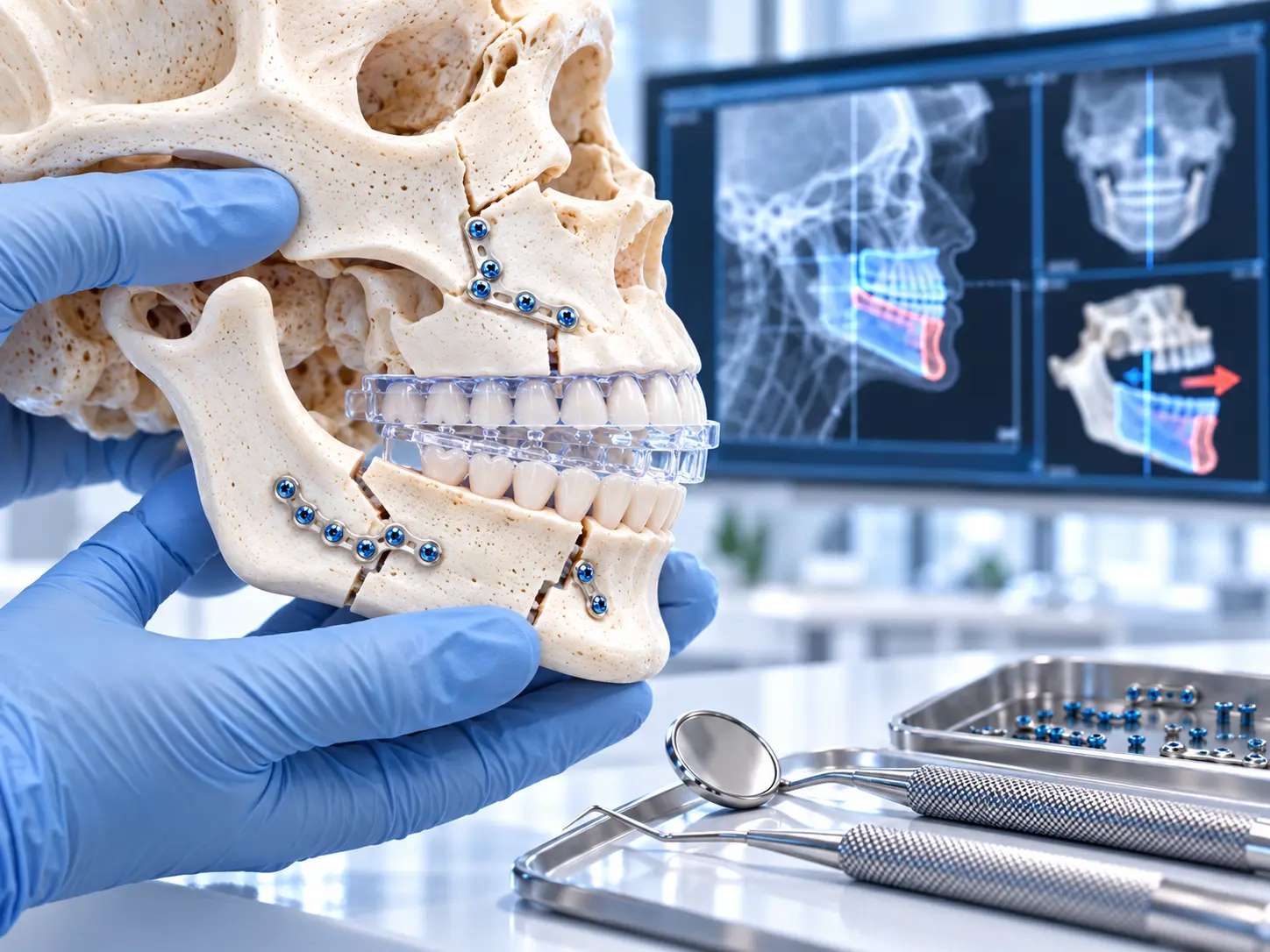
The surgical plan may involve only the upper jaw, only the lower jaw or both jaws.
Procedures that reposition the upper jaw may be described as maxillary surgery, procedures involving the lower jaw as mandibular surgery, and repositioning of both jaws as double-jaw or bimaxillary surgery.
Additional procedures such as genioplasty involving the chin area may also be considered in selected patients.
The appropriate procedure cannot be determined simply by looking at facial appearance.
Skeletal diagnosis, bite goals, airway and general health evaluation and the patient’s informed preferences are considered together.
The day of surgery and hospital care
Orthognathic surgery is performed under general anaesthesia in a hospital setting by an oral and maxillofacial surgeon.
After the jaw bones have been repositioned according to the surgical plan, they are commonly stabilised using small plates and screws.
The duration of surgery and the need for a hospital stay vary according to the extent of the procedure and the patient’s recovery.
Instructions regarding fasting, medications, smoking and other preparations are provided by the surgical team before the operation.
Discharge from hospital is planned according to the patient’s general condition, ability to take fluids, pain control and the surgeon’s assessment.
This information is general; instructions provided by the surgical team should always take priority for the individual operation.

Recovery after orthognathic surgery
After surgery, swelling, bruising, restricted mouth opening, fatigue and temporary changes in sensation may occur around the face and jaw.
The degree of swelling, dietary requirements and the time required to return to normal daily activities vary according to the procedure and individual healing.
During the early recovery period, the surgical team provides individual instructions regarding liquid or soft diets, oral hygiene, elastic wear, physical activity and follow-up appointments.
It is not appropriate to give a fixed time for returning to work, school or sport.
The patient should follow the recovery programme recommended by the surgeon and orthodontist.
Does orthodontic treatment continue after surgery?
In most surgical orthodontic treatment plans, orthodontic treatment continues after surgery so that the contacts between the teeth can be refined in detail.
Healing, jaw relationships, elastic wear and the bite are monitored during follow-up appointments.
Once the active orthodontic phase has been completed, fixed or removable retainers may be planned to help maintain the new tooth positions.
Braces should not be expected to be removed immediately after surgery.
The timing of orthodontic completion depends on healing and the final bite relationship.
What are the possible risks of orthognathic surgery?
As with any surgical procedure, orthognathic surgery has potential risks and complications. These vary according to the procedure and the patient’s individual health.
Areas that may need to be considered include:
- Bleeding, infection and risks associated with anaesthesia
- Swelling, pain and temporary limitation of movement
- Temporary or permanent changes in sensation involving the lips, chin, cheeks or gums
- Unwanted bite contacts or the need for additional orthodontic adjustment
- Partial relapse of jaw position or the need for further intervention
- Problems related to plates and screws
- Complications involving the teeth, gums, bone or temporomandibular joints
- Differences between expected facial changes and the patient’s perception of the result
The likelihood and individual significance of these risks cannot be determined from this general list.
Detailed risk assessment and surgical consent should be provided by the surgeon performing the operation.
Does orthognathic surgery treat TMD?
Orthognathic surgery is primarily planned to correct skeletal jaw position and bite problems.
It is not possible to predict with certainty how temporomandibular joint or chewing muscle symptoms will change after surgery for every patient.
Symptoms may improve, remain unchanged or change in some individuals.
In surgical candidates who have TMD symptoms, the joint and muscle findings should be evaluated separately.
Orthognathic surgery should not be recommended solely to eliminate joint sounds or unexplained facial pain.
TMD treatment and orthognathic surgery are different areas of treatment.

Are there non-surgical alternatives?
Non-surgical options depend on the extent of the problem and the patient’s treatment goals.
Orthodontic camouflage, limited tooth movement or observation without treatment may be considered for some patients.
However, these approaches do not change the skeletal position of the jaw bones in the same way as surgery.
The benefits and limitations of alternatives should be discussed in relation to the amount of safe tooth movement within the bone, periodontal health, facial balance, bite and patient expectations.
The option of having no treatment should also be discussed together with its possible functional and aesthetic implications.
The treatment decision should be made with adequate information and time for consideration rather than under pressure.
What affects treatment duration and cost?
The orthognathic treatment process may include pre-surgical orthodontics, surgical preparation, the hospital phase, recovery and post-surgical orthodontic treatment.
Overall treatment time varies according to the initial positions of the teeth, the extent of surgery, individual healing and orthodontic progress.
An exact treatment duration cannot be determined from an oral photograph alone.
Costs may be influenced by diagnostic records, the extent of orthodontic treatment, hospital and surgical team fees, the operation performed, anaesthesia, materials and follow-up requirements.
Orthodontic and surgical fees may be planned separately by different institutions or treatment teams.
A more specific treatment scope and cost can be discussed once the multidisciplinary assessment has been completed.
Surgical orthodontic assessment in Istanbul, Kadıköy and Caddebostan
At Dr. Esma Kuriş Baştan’s clinic in Caddebostan, skeletal jaw discrepancies, bite relationships and the potential need for surgical orthodontic treatment are evaluated individually.
The clinic can be reached from Kadıköy, Caddebostan, Suadiye, Erenköy, Bostancı, Göztepe, Kozyatağı, Fenerbahçe and surrounding areas.
During the initial orthodontic assessment, findings that may suggest a need for surgical treatment are reviewed.
When appropriate, a joint assessment with an oral and maxillofacial surgeon may be planned.
Orthodontic preparation is followed by Dr. Esma Kuriş Baştan; the decision to operate, the surgical procedure itself and the hospital-based surgical care are managed by the surgical team performing the operation.
Frequently asked questions
Is orthognathic surgery the same as jaw surgery?
Orthognathic surgery refers to jaw surgery performed to correct the skeletal position of the jaws and the relationship between the teeth. Not every type of jaw surgery is orthognathic surgery; operations for joint disorders, trauma or other diseases may have a different purpose.
Is orthognathic surgery performed only for cosmetic reasons?
No. Treatment may consider functional goals such as chewing, biting and the bite relationship together with possible effects on facial balance and appearance. Each patient’s priorities and clinical requirements are different.
Why are braces used before jaw surgery?
Pre-surgical orthodontics prepares the teeth so that they can meet appropriately once the jaws have been moved to their planned positions. Because existing dental compensations are removed during this stage, the bite may temporarily appear more mismatched.
Will there be visible scars after orthognathic surgery?
Many orthognathic procedures are carried out through incisions inside the mouth. Depending on the specific operation, however, a small external incision may sometimes be required. The location of incisions and the possibility of scarring should be explained by the surgeon before the procedure.
Can numbness occur after jaw surgery?
Temporary changes in sensation around the lower lip and chin can occur particularly after lower jaw surgery, and in some patients there may also be a risk of a permanent sensory change. Individual risk depends on the procedure and should be discussed with the surgical team.
When are braces removed after orthognathic surgery?
Braces usually remain in place after surgery until detailed bite refinement has been completed. The duration depends on healing, tooth movement and the final bite relationship, so a fixed removal date cannot be given in advance.
Personalised surgical orthodontic assessment
Whether orthognathic surgery may be appropriate for you is assessed by considering jaw structure, tooth position, the bite, growth status, general health and treatment expectations together.
You can contact our clinic to discuss non-surgical alternatives, orthodontic preparation and the multidisciplinary treatment process.
Contact & Appointment Get Information via WhatsAppThe information on this page is provided for general informational purposes and does not replace a clinical examination, surgical consultation, diagnosis, informed consent or a personalised treatment plan. The extent and risks of surgery should be explained by the surgical team performing the operation.
