
Functional Orthodontics
Functional orthodontics includes orthodontic approaches designed to improve the relationship between the upper and lower jaws and the way the teeth meet in suitable growing patients. Removable or fixed functional appliances may be used as part of treatment. Suitability depends on the type of problem, the child’s stage of growth, dental development and the ability to follow the prescribed appliance routine.
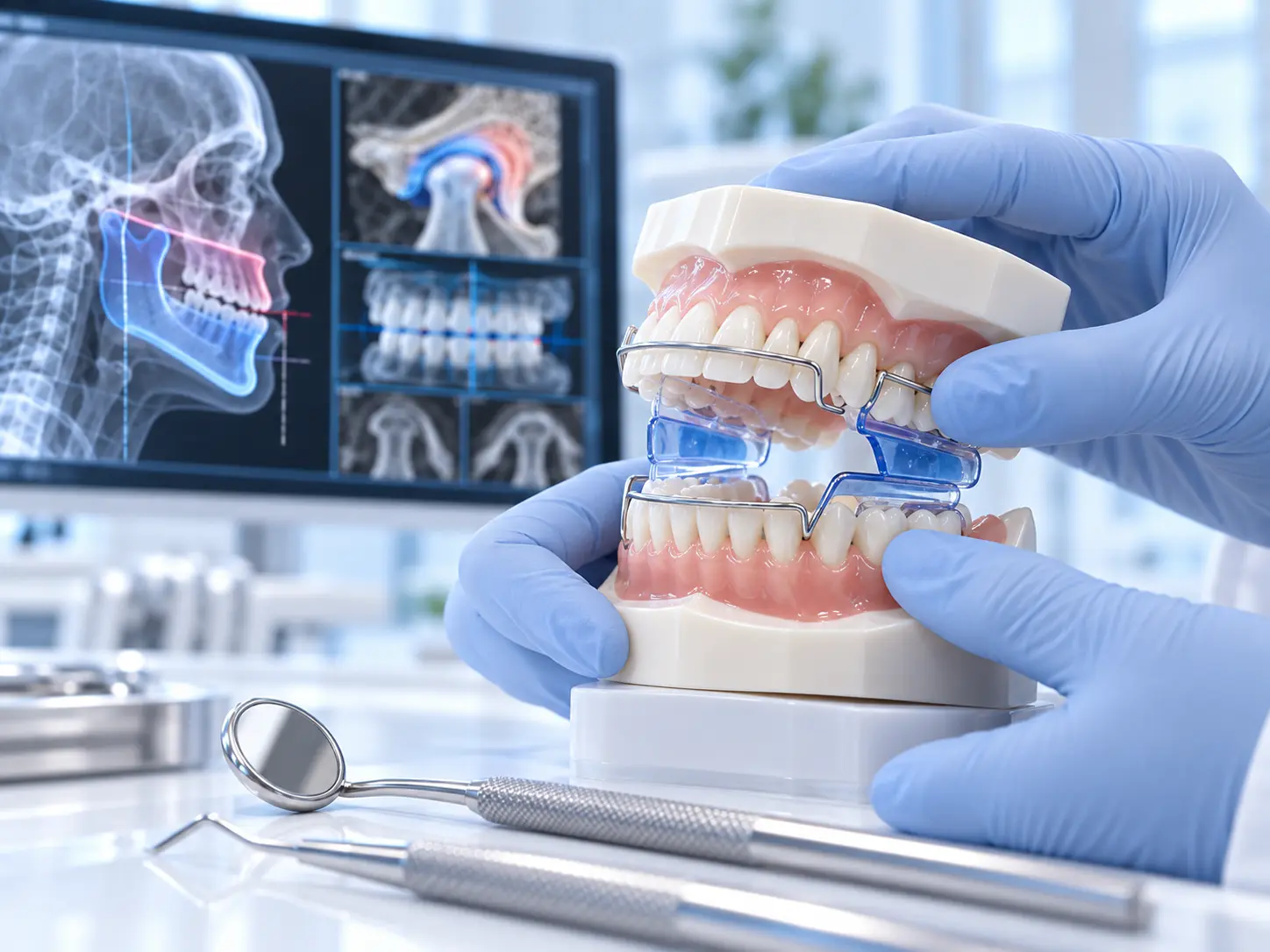
What is functional orthodontics?
Functional orthodontic treatment focuses not only on aligning individual teeth but also on the relationship between the upper and lower dental arches.
Functional appliances are designed to guide the jaw into a planned position and make use of the adaptation of the muscles, teeth and surrounding tissues to that position.
This approach is mainly considered in children and adolescents who are still growing. Functional treatment does not produce the same effect in every jaw or bite problem.
The changes that may be achieved depend on the patient’s growth potential, the nature of the problem, the type of appliance and how consistently it is used.
When may functional orthodontics be considered?
Functional appliances may form part of the treatment plan for some patients who are at an appropriate stage of growth and have findings such as:
- Upper teeth that appear significantly ahead of the lower teeth
- Bite relationships in which the lower jaw is positioned behind the upper jaw
- A noticeable discrepancy between the upper and lower bite
- Increased horizontal distance between the front teeth, known as increased overjet
- Difficulty comfortably closing the lips over the front teeth
- Prominent upper front teeth that may be more vulnerable to trauma
- Certain jaw relationship problems that may be appropriate to manage during growth
The presence of one of these findings does not automatically mean that a functional appliance is suitable.
Whether the problem is dental, skeletal or a combination of both is assessed together with the patient’s growth stage and other clinical records.
How is the right timing for functional treatment determined?
The timing of functional treatment is not determined by chronological age alone.
Tooth eruption, the direction of jaw growth, skeletal maturity and changes in growth rate are all considered. Two children of the same age may be at very different stages of development.
During the orthodontic assessment, facial and jaw development, bite relationships and the stage of dental development are evaluated.
When required, radiographic records may provide additional information about growth and development.
For some children, regular monitoring may be recommended until a more appropriate treatment period is reached. For others, treatment may be started to make use of the remaining growth potential.
What is assessed during a functional orthodontic consultation?
During the first consultation, the concerns of the child and family, previous dental treatment, oral habits and general health history are discussed.
Facial balance, the relationship between the upper and lower jaws, the bite, the horizontal and vertical relationship of the front teeth, jaw movements and oral hygiene are examined clinically.
Intraoral and facial photographs, digital scans or models and appropriate radiographic records may be obtained for treatment planning.
These records are used to assess whether a functional appliance is suitable, when treatment should begin and whether another orthodontic phase may be required later.
How do functional appliances work?
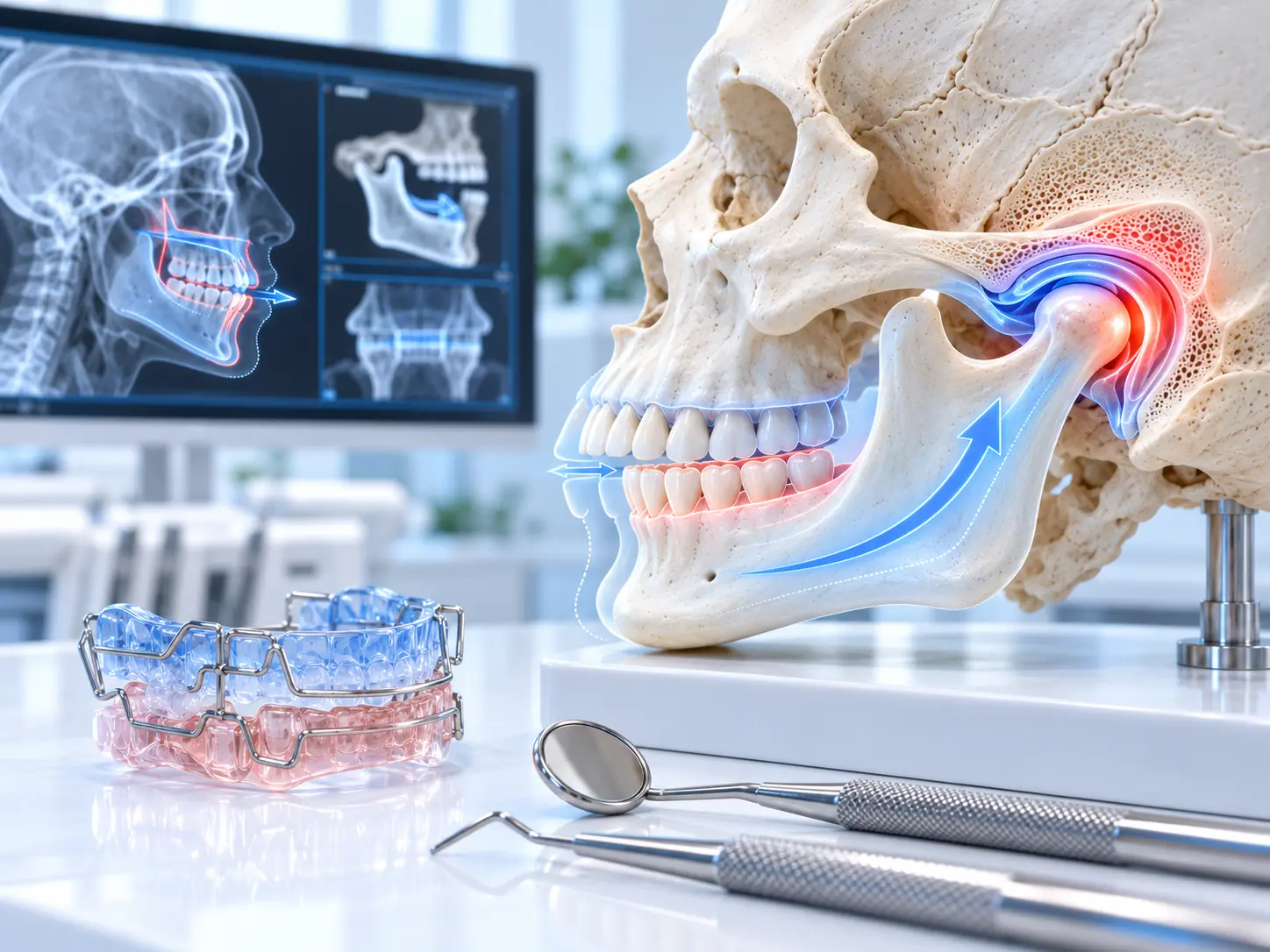
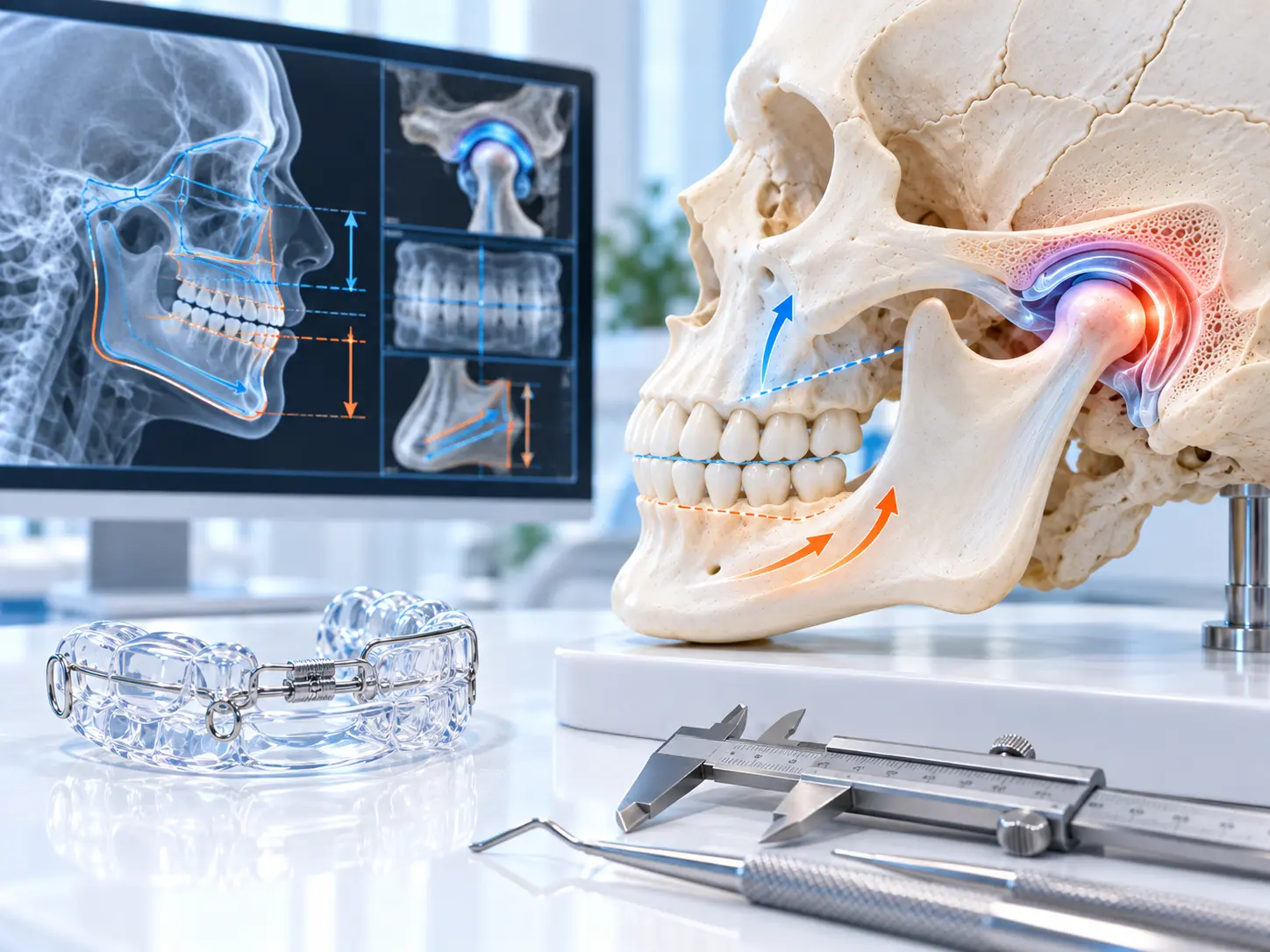
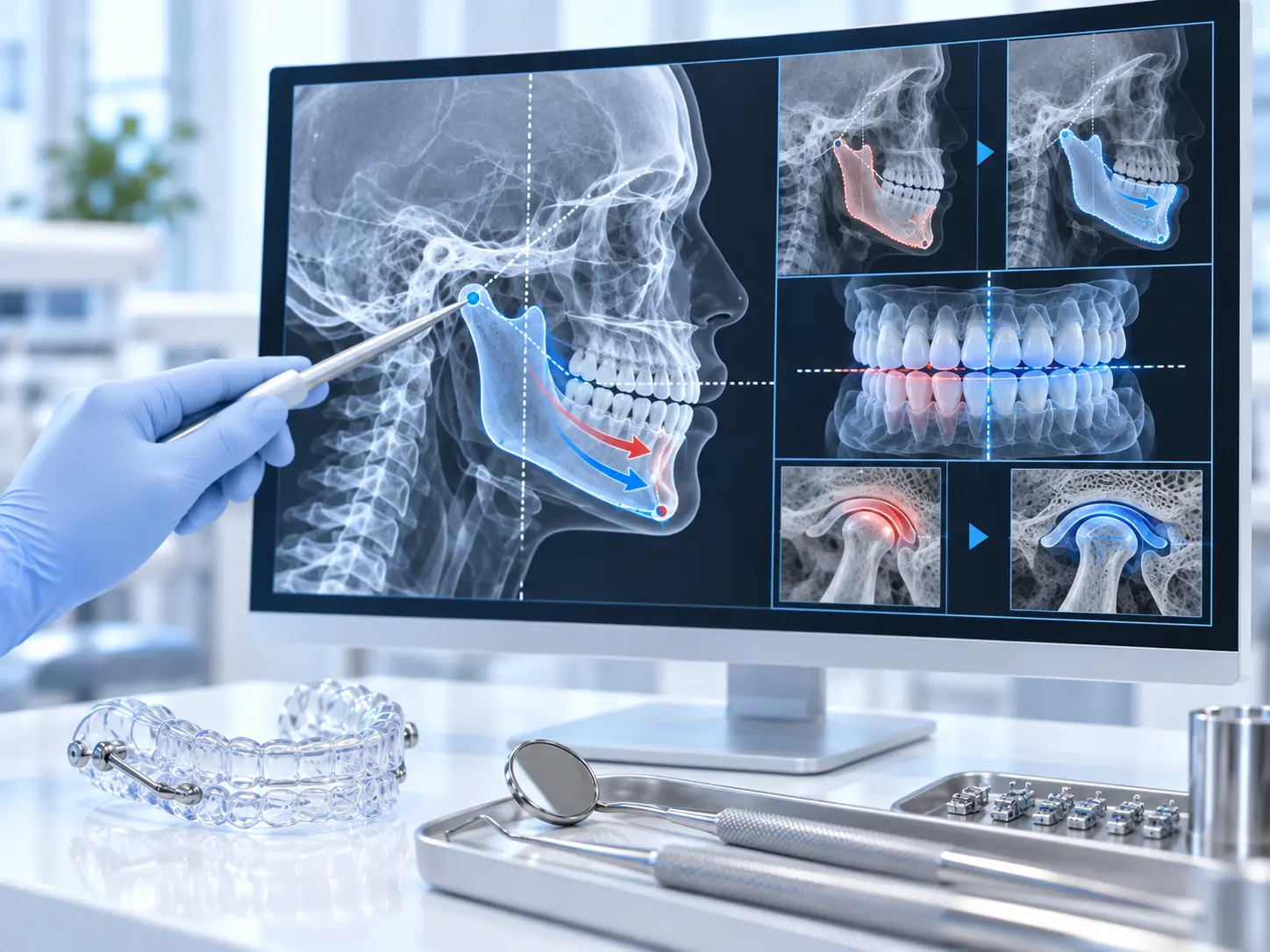
Functional appliances are designed to hold the upper and lower jaws in a particular relationship in order to influence the bite.
Some removable appliances consist of separate upper and lower components. When the mouth closes, the components engage with each other and help guide the lower jaw into a planned forward position.
Changes during treatment may involve not only skeletal structures but also tooth position and the surrounding soft tissues.
For this reason, the result should not be described simply as “growing the jaw”. The goal is to improve the dental and jaw relationships within the patient’s existing growth potential.
Removable and fixed functional appliances
Functional appliances may be removable or fixed.
Removable appliances such as Twin Block can be taken in and out by the patient. This may make cleaning and some daily activities easier, but treatment depends on following the recommended wearing schedule.
Fixed functional appliances cannot be removed by the patient and may be considered in certain clinical situations.
Appliance selection is not based on convenience alone. The nature of the orthodontic problem, dental development, patient cooperation, oral hygiene and later stages of treatment are considered together.
What is a Twin Block appliance?
Twin Block is one of the removable appliances used in functional orthodontics.
It usually consists of two separate components that fit over the upper and lower teeth.
When the child closes their mouth, the inclined surfaces of the appliance meet and help hold the lower jaw in the forward position planned as part of treatment.
Twin Block is not automatically suitable for every patient with a retrusive lower jaw or prominent upper front teeth.
The appliance design, the planned jaw position and the daily wearing schedule are determined individually.
Irregular wear, poor fit or repeated breakage may reduce the planned effect and alter treatment duration.
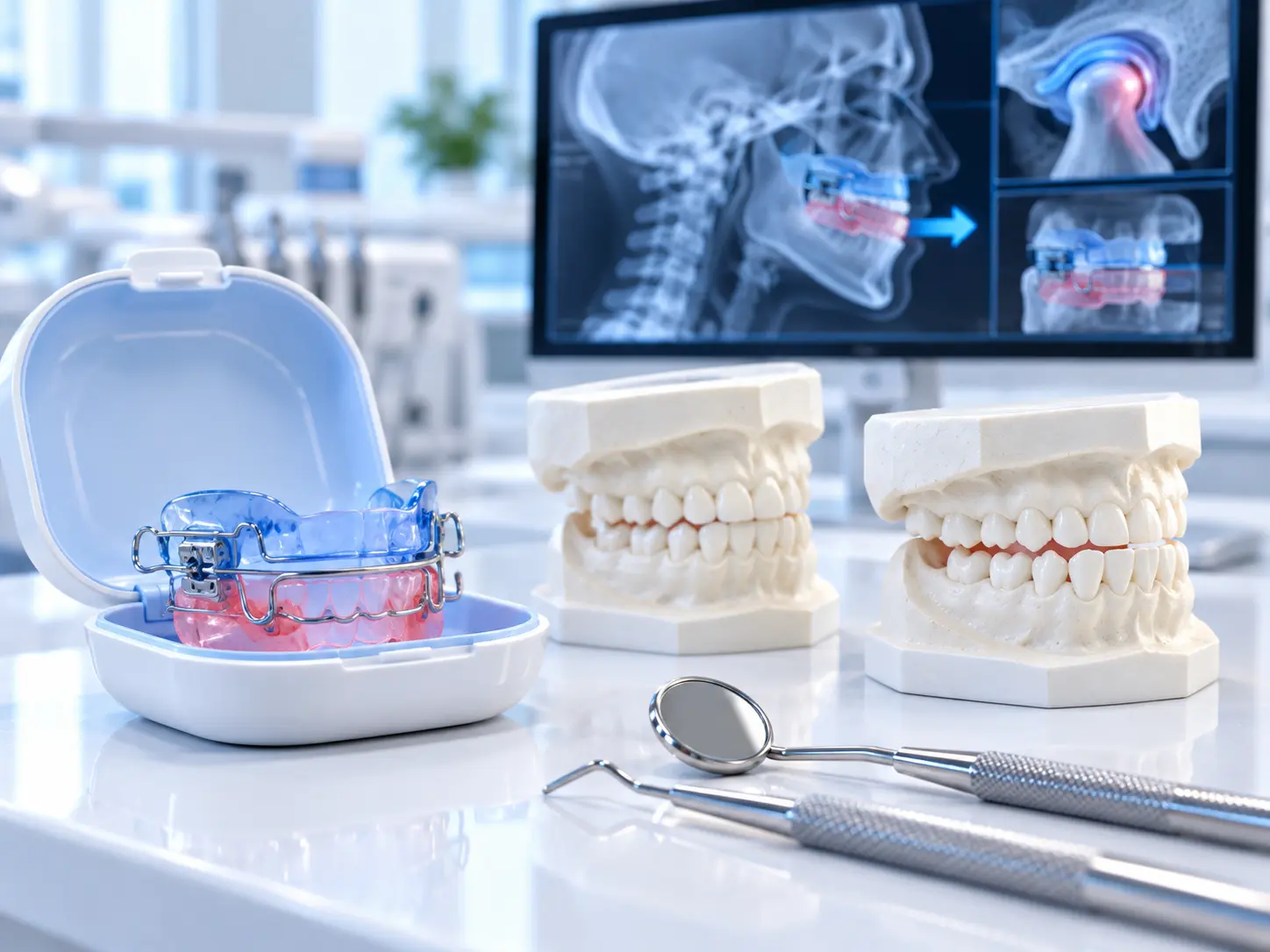
How many hours a day should a functional appliance be worn?
The required wearing time for a removable functional appliance depends on the appliance and the individual treatment plan.
Many functional appliances may need to be worn for a substantial part of the day.
Whether the appliance should be removed for meals, sports or cleaning should follow the orthodontist’s individual instructions.
Insufficient wear may make it more difficult to achieve the treatment goals.
If the appliance is lost, broken, no longer fits properly or causes pain, the wearing schedule should not be changed without contacting the clinic.
At review appointments, both appliance fit and changes in the jaw and dental relationships are assessed.
What may happen while adapting to a functional appliance?
When a functional appliance is first fitted, the mouth may feel fuller than usual and temporary changes in speech, increased saliva and mild pressure on the teeth may occur.
Inserting and removing a removable appliance and speaking while wearing it generally become easier with time.
Temporary adaptation symptoms should be distinguished from an appliance that rubs, causes persistent pain or no longer fits properly.
If there is a sharp edge, ulceration, significant pain or the appliance unexpectedly interferes with the bite, the clinic should be contacted without waiting for the next scheduled appointment.
Cleaning and daily care of functional appliances
Removable appliances should be cleaned regularly using the method recommended by the orthodontist.
Very hot water should not be used because it may distort the appliance.
When the appliance is out of the mouth, it should be stored in an appropriate protective case to reduce the risk of loss or breakage.
Healthy teeth and gums are important for continuing treatment safely.
Teeth should be brushed regularly with fluoride toothpaste, and plaque should not be allowed to accumulate around the appliance.
Frequent consumption of sugary food and drinks may increase the risk of tooth decay. Special cleaning aids may be recommended for fixed functional appliances.
Are braces needed after functional treatment?
Functional appliances may be one stage of treatment aimed at improving jaw and bite relationships, but they may not fully correct tooth crowding or detailed bite contacts on their own.
For this reason, fixed braces or another orthodontic method may be planned after functional treatment in many patients.
Whether a second phase is required depends on the original problem and the situation at the end of functional treatment.
Families should understand from the beginning that treatment may involve monitoring and additional orthodontic stages rather than only the period of appliance wear.
How does functional orthodontics relate to orthodontics for children?
Functional orthodontics is one of the treatment approaches within orthodontics for children that focuses particularly on growth and jaw relationships.
Orthodontics for children is a broader field that includes tooth eruption, lack of space, crowding, bite problems and overall jaw development.
Not every child undergoing orthodontic assessment needs a functional appliance.
Monitoring, braces, clear aligners, space maintenance or another treatment approach may be more appropriate depending on the findings.
The treatment method is selected according to the child’s diagnostic findings and stage of development.
What are the limitations of functional orthodontics?
The outcome that may be achieved with a functional appliance is closely related to the child’s remaining growth potential and cooperation with treatment.
When growth is largely complete, the ability to influence jaw relationships by making use of growth is limited.
In more significant skeletal discrepancies, a functional appliance alone may not be sufficient.
Functional treatment should not be presented as a method that will definitely correct facial development, breathing problems or temporomandibular joint conditions.
Use of a functional appliance does not guarantee that fixed orthodontic treatment or surgical assessment will not be required later.
Expected benefits, limitations and alternative options should be explained individually.
What affects treatment duration and cost?
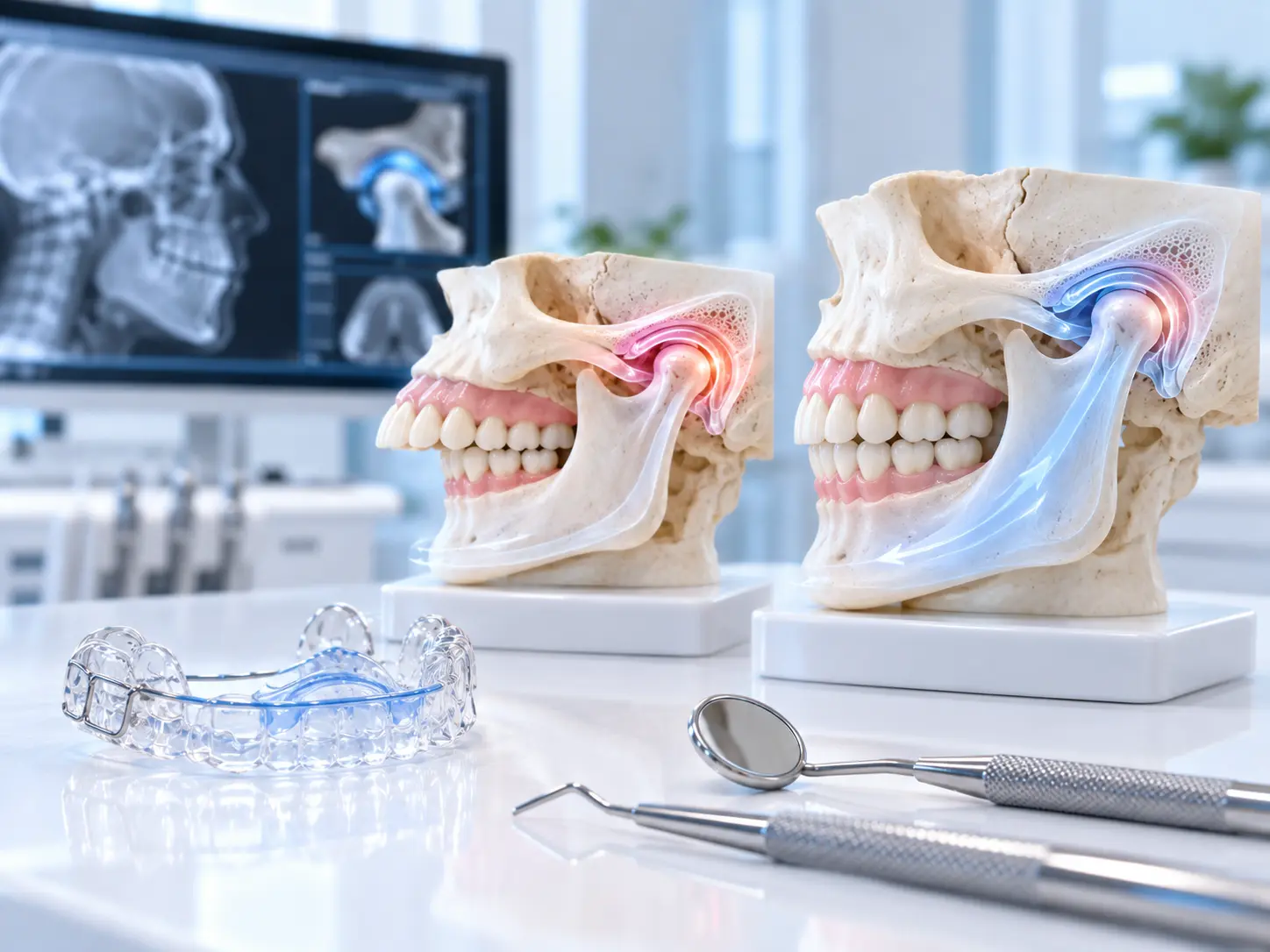
The duration of functional treatment varies according to the child’s stage of growth, the extent of the jaw discrepancy, the appliance used, daily wearing routine and attendance at review appointments.
Irregular wear, loss or breakage of the appliance may extend treatment.
If fixed orthodontic treatment is required after the functional phase, this may also affect the overall treatment duration.
Cost may vary according to the scope of the examination and diagnostic records, the type of appliance, laboratory procedures, the review plan and any additional orthodontic stages that may be required.
A more specific treatment method, duration and fee can be discussed after clinical assessment has been completed.
Functional orthodontics in Istanbul, Kadıköy and Caddebostan
At Dr. Esma Kuriş Baştan’s clinic in Caddebostan, children’s dental development, facial and jaw growth and the relationship between the upper and lower jaws are evaluated individually.
The clinic can be reached from Kadıköy, Caddebostan, Suadiye, Erenköy, Bostancı, Göztepe, Kozyatağı, Fenerbahçe and surrounding areas.
During the first consultation, the child’s stage of development and bite characteristics are assessed.
Whether a functional appliance is appropriate, the timing of treatment, the responsibility for daily wear and any further orthodontic stages that may be required are discussed with the family after the necessary records have been reviewed.
Frequently asked questions
At what age is functional orthodontics used?
There is no single age that applies to every child. Timing depends on dental development, skeletal maturity, growth rate and the type of orthodontic problem. Chronological age alone is not sufficient for treatment planning.
Does a functional appliance grow the lower jaw?
Functional appliances aim to improve jaw and bite relationships in suitable patients who are still growing. Treatment changes are not limited to skeletal growth; dental and soft-tissue changes may also occur. The effect that can be achieved varies between individuals.
Is a Twin Block worn while eating?
This depends on the appliance design and the orthodontist’s treatment plan. In some treatment plans the appliance may be worn during meals, while in others it may be removed. The child should follow the individual instructions provided by the orthodontist.
Does a functional appliance affect speech?
Temporary speech changes and increased saliva may occur during the first few days. Adaptation generally improves with regular wear and speaking practice. If significant difficulties continue, appliance fit should be reviewed.
Are braces needed after functional treatment?
Many patients may require fixed braces or another orthodontic phase to complete detailed tooth alignment and bite correction. This depends on the original problem and the result achieved at the end of functional treatment.
Can functional orthodontics be used in adults?
The effects of functional treatment that depend on growth are mainly considered in patients who are still growing. In adults with similar jaw relationship problems, other options such as orthodontic camouflage or orthognathic surgery may need to be assessed separately.
A personalised functional orthodontic assessment for your child
Whether a functional appliance is suitable for your child is determined by evaluating dental development, jaw relationships, stage of growth, oral health and the ability to follow the prescribed wearing routine.
You can contact our clinic to learn more about treatment timing and alternative orthodontic options.
Contact & Appointment Get Information via WhatsAppThe information on this page is provided for general informational purposes and does not replace a clinical examination, growth assessment, diagnosis or personalised treatment recommendation for your child.
