Why Early Dental and Orthodontic Check-Ups Matter for Children
A child’s dental development begins long before all permanent teeth have erupted. Primary teeth, permanent tooth eruption, bite relationships and jaw growth can provide important information about developing oral health. In this guide, we explain when dental and orthodontic assessments may begin, what an orthodontist evaluates during childhood and why an early check-up does not necessarily mean early treatment.
The First Dental and Orthodontic Check-Ups
When should a child first visit a dentist?
Dental care begins much earlier than many parents expect. The first years of life are important for establishing healthy oral hygiene habits, monitoring the eruption of the primary teeth and identifying factors that may increase the risk of dental problems.
Early dental visits also give parents an opportunity to receive individual guidance about brushing, nutrition, fluoride use, oral habits and the development of their child’s teeth.
The timing and frequency of later dental check-ups are determined according to the child’s oral health, dental development and individual risk factors.
When should a child first see an orthodontist?
An orthodontic assessment has a different purpose from a routine dental examination. In addition to the health of the teeth, an orthodontic evaluation considers tooth alignment, bite relationships, available space for permanent teeth and the development of the jaws.
The early mixed-dentition period, when both primary and permanent teeth are present, can provide valuable information about how the teeth and jaws are developing.
A first orthodontic assessment is commonly considered around the early school years, often by approximately age seven. However, if a developing orthodontic problem is noticed earlier, there is no need to wait for a particular age before seeking an evaluation.
Does an orthodontic check-up at age seven mean starting braces?
No. An early orthodontic evaluation does not mean that every child needs braces, clear aligners or another orthodontic appliance.
For many children, the most appropriate recommendation may simply be observation. The orthodontist can monitor tooth eruption, changes in the bite and jaw development at appropriate intervals.
The purpose of an early assessment is to understand development and identify the most appropriate timing if treatment becomes necessary.
What Is Evaluated During Early Orthodontic Assessment?
Why can early orthodontic evaluation be useful?
Some orthodontic findings can be assessed more clearly while a child is still growing. The relationship between the jaws, the eruption path of permanent teeth, the space available in the dental arches and the way the upper and lower teeth meet can all provide useful information during development.
An early evaluation helps determine whether development appears appropriate, whether periodic observation is advisable or whether a particular finding deserves closer attention.
Early diagnosis and early treatment are therefore not the same thing. The goal is not to begin treatment as soon as possible, but to determine whether there is a reason to follow or intervene at a particular stage of growth.
What does an orthodontist examine in a child?
An orthodontic assessment considers several aspects of dental and jaw development together.
- Crowded, rotated or unusually spaced teeth
- Crossbite, open bite or deep bite relationships
- The relative position of the upper and lower jaws
- The eruption pattern of permanent teeth
- The amount of space available in the dental arches
- Primary teeth that have been lost earlier or retained longer than expected
- Persistent oral habits that may influence dental development
- Noticeable facial or jaw asymmetry
The presence of one of these findings does not automatically mean that orthodontic treatment is necessary. The child’s age, growth pattern, clinical examination and diagnostic findings need to be considered together.
Why not simply wait until all permanent teeth have erupted?
Waiting until all permanent teeth are present may be entirely appropriate for some children, but it is not necessarily the best approach for every orthodontic problem.
Certain findings are related not only to the final position of the teeth but also to eruption, available space, jaw relationships and growth.
Evaluating these factors while development is continuing can help the orthodontist decide whether treatment should be considered during growth or whether it is preferable to wait.
Jaw Growth, Bite Development and Oral Habits
Why is jaw growth important in children’s orthodontics?
Orthodontic development is not limited to whether individual teeth are straight. The relationship between the upper and lower jaws also influences the way the teeth meet and how the bite develops.
Because children are still growing, the stage and direction of jaw development may be relevant when certain bite relationships are evaluated.
This is one reason why orthodontic assessment during growth can provide information that is different from an evaluation performed after growth has largely been completed.
What is functional orthodontic treatment?
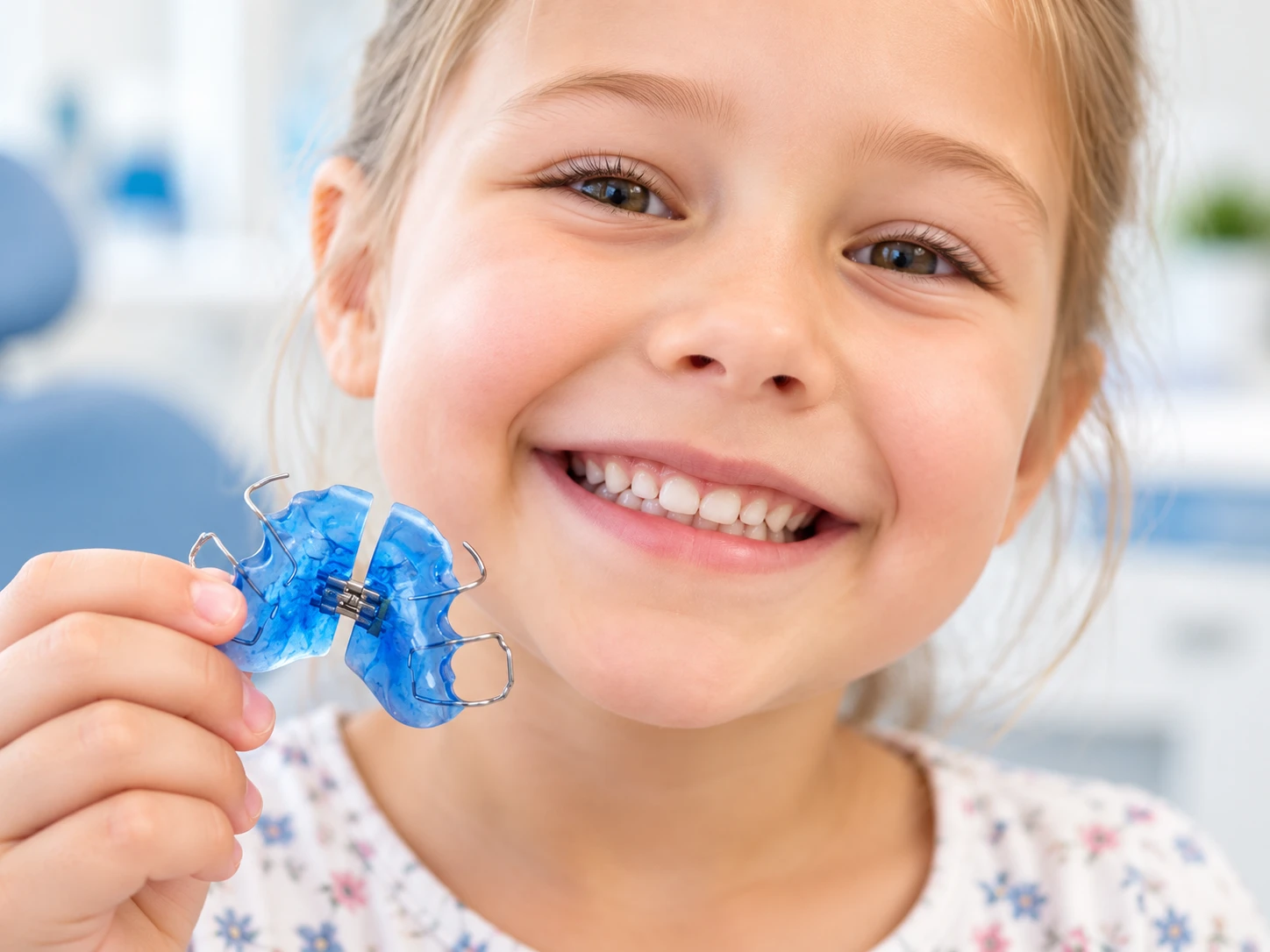
Functional orthodontic treatment refers to approaches that may be considered in selected growing patients when the relationship or development of the jaws forms part of the orthodontic problem.
Different appliances or treatment methods can be considered depending on the child’s jaw relationship, growth stage and individual treatment objectives.
Functional treatment is not suitable or necessary for every child. Whether it has a role can only be determined after an individual orthodontic examination.
You can find more detailed information on our Functional Orthodontic Treatment page.
Can childhood oral habits affect orthodontic development?
Persistent oral habits can sometimes influence the position of the teeth or the developing bite.
The potential effect depends on factors such as the type of habit, how frequently it occurs, how long it has continued and the child’s stage of dental development.
When parents are concerned about a persistent habit or notice changes in the position of the teeth or bite, an orthodontic evaluation can help determine whether monitoring or further assessment is appropriate.
Monitoring, Treatment Timing and the First Consultation
What happens during a child’s first orthodontic consultation?
The first consultation generally begins with a discussion of the parents’ concerns, the child’s dental history and any observations related to tooth eruption, jaw growth or the bite.
The orthodontist evaluates the alignment of the teeth, the relationship between the upper and lower dental arches and the development of the jaws.
When additional diagnostic information is required, photographs, digital scans or radiographic records may be considered according to the clinical needs of the individual child.
At the end of the assessment, the family may be advised that treatment is not currently required, that periodic monitoring would be useful or that a particular treatment approach should be discussed.
Can monitoring be the correct orthodontic decision?
Yes. Families sometimes expect an orthodontic consultation to end with an appliance or an immediate treatment plan, but observation can itself be an important clinical decision.
Periodic follow-up allows tooth eruption, available space, bite changes and jaw growth to be reassessed over time.
This can help avoid beginning treatment before it is necessary while still allowing developing orthodontic problems to be followed appropriately.
When may an earlier orthodontic assessment be particularly useful?
Parents do not need to wait for a routine age milestone if they notice something unusual in their child’s dental or jaw development.
An earlier evaluation may be considered when there is a visible crossbite, significant crowding, an unusual jaw relationship, concerns about permanent tooth eruption, persistent oral habits or noticeable difficulty with the way the teeth meet.
The purpose of the consultation is to determine whether the finding is part of normal development, requires monitoring or should be assessed in greater detail.
What Parents Should Know About Early Orthodontic Care
What is the difference between a dental check-up and an orthodontic check-up?
Routine dental care and orthodontic evaluation complement one another, but they focus on different aspects of oral health.
Dental examinations monitor issues such as tooth decay, gum health, oral hygiene and the general condition of the teeth.
Orthodontic assessment focuses more specifically on tooth alignment, eruption patterns, available space, bite relationships and jaw development.
A child may therefore have healthy teeth but still benefit from an orthodontic assessment if there are concerns about alignment, eruption or the developing bite.
Are X-rays or digital records always required at the first visit?
Not every child necessarily requires the same diagnostic records at the first orthodontic appointment.
Clinical examination is the starting point. Photographs, digital intraoral scans or radiographic records may be requested when they are considered useful for understanding tooth eruption, root position, jaw relationships or another clinical question.
The records selected should therefore be based on the individual child’s clinical needs rather than a standard protocol applied to every patient.
What is the most important point for parents to remember?
There is no single orthodontic treatment age that applies to every child.
Some children only require observation. Others may benefit from treatment during growth, while some may not require orthodontic treatment until more permanent teeth have erupted.
The aim of an early orthodontic check-up is therefore not to start treatment as early as possible. It is to understand the child’s individual dental and jaw development and determine whether monitoring or treatment may be appropriate at a particular stage.
For treatment-focused information, you can also visit our Orthodontics for Kids page.
Would you like to have your child’s orthodontic development evaluated?
An orthodontic assessment can help evaluate tooth eruption, bite relationships, available space and jaw development while your child is growing.
You can contact our clinic in Caddebostan, Istanbul for further information about children’s orthodontic assessment and individualized treatment planning.
This content has been prepared for general informational purposes and does not replace a clinical examination, diagnosis or an individualized dental or orthodontic treatment plan.
For treatment-focused information about orthodontic development in children, visit the Orthodontics for Kids treatment page.