Invisalign Guide: What You Need to Know About Clear Aligner Treatment
Clear aligner treatment is an orthodontic treatment method that can be considered for different age groups, from children to adults, and is carried out through digital planning and individually manufactured aligners. In this guide, we bring together the topics patients most frequently ask about Invisalign and clear aligner treatment, including treatment duration, daily aligner wear, attachments, IPR, cleaning, digital planning and post-treatment retention.
The Basic Principles of Invisalign and Clear Aligner Treatment
1. What are clear aligners (Invisalign), and how do they move the teeth?
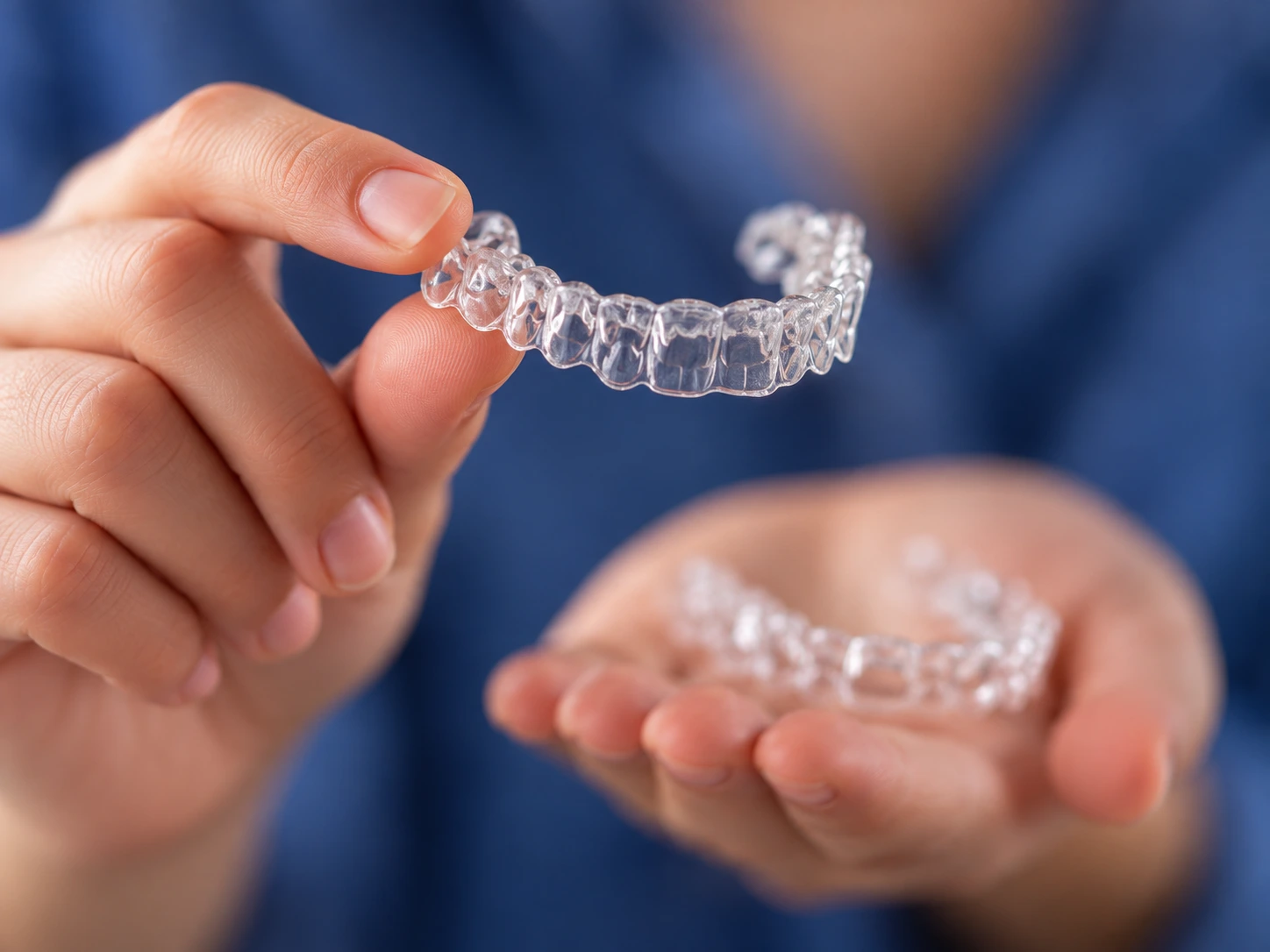
Clear aligners are removable thermoplastic aligners individually prepared to orthodontically move crowded teeth or teeth whose position is planned to be changed.
A series of aligners designed to fit the mouth is prepared using three-dimensional digital impressions taken from the patient. Each aligner is designed to carry out a part of the tooth movement determined in the treatment plan.
Through the controlled forces created by the aligners on the teeth and regular aligner changes, the teeth are gradually guided towards their planned positions.
2. Invisalign or braces? Which treatment is more suitable for whom?
Clear aligner treatment can be considered for different age groups when an accurate diagnosis and an individualized treatment plan are established.
In children who are still growing and developing, some clear aligner systems may be used to support the development of the dental arches, manage space deficiency and assist in the orthodontic guidance of certain jaw relationships.
In adults, age alone is not a determining factor for treatment. Clear aligners may particularly be considered in suitable individuals whose teeth need to be positioned appropriately before comprehensive prosthetic rehabilitation, or in those who do not wish to use a bracket-and-wire system.
Which method is more appropriate is determined by evaluating the type of crowding, the bite relationship, gum and bone health, the extent of the planned movements and the patient’s compliance with treatment.
3. Can Invisalign correct every type of dental crowding?
Today, clear aligner systems are used not only for simple alignment problems but, in suitable cases, can also be included in treatment plans for open bite, deep bite, crossbite and different types of malocclusion.
In some orthognathic surgery patients, orthodontic preparation before and after surgery may be carried out with clear aligners. In growing children, certain functional features can also be used together with clear aligner systems.
However, not every case has to be treated using clear aligners alone. In some growth and jaw relationship problems, combining conventional functional appliances with clear aligners may be more appropriate.
For this reason, the treatment method should be determined through a detailed orthodontic examination and individualized planning rather than a standard protocol.
Treatment Duration, Daily Wear and the Adjustment Period
4. How long does clear aligner treatment take?
The duration of clear aligner treatment varies according to the treatment goals and the tooth movements that need to be performed.
The main factors affecting treatment duration include:
- The initial condition of the case
- The type of tooth movements that need to be performed
- The patient’s compliance with treatment and daily aligner wear time
- The use of attachments or auxiliary mechanics
- The need for additional aligners or refinement later in treatment
As a general framework, some simple crowding cases may take approximately 3–6 months, moderate cases 6–12 months, while more comprehensive orthodontic treatments may take 12–24 months or longer.
The exact treatment duration can only be estimated after an individualized orthodontic assessment and digital treatment planning.
5. How many hours a day should Invisalign aligners be worn?
The aligners need to be worn regularly for the planned tooth movements to take place. Depending on the treatment plan, patients are generally asked to wear their aligners for approximately 22 hours a day.
Aligners are removed during meals, oral hygiene and when consuming beverages other than water.
Wearing the aligners for less than the recommended period may prevent the teeth from following the movements planned in the aligners and may prolong treatment.
6. Can you eat with clear aligners? Can you drink coffee or tea?
It is recommended that the aligners be removed while eating. This helps maintain oral hygiene and aims to prevent physical deformation that chewing forces may cause in the aligners.
Hot tea or coffee may affect the structure of the aligner. Coloured beverages may also cause staining and discolouration.
Daily habits should be discussed with the orthodontist at the beginning of treatment so that an appropriate individual routine can be established.
7. Does Invisalign affect speech? How long does a lisp last?
When the first aligner is placed in the mouth, some people may experience a mild lisp or temporary changes in the pronunciation of certain sounds.
This usually decreases within the first few days. As the tongue and lips adapt to the surface of the aligners, speech gradually returns to normal.
Rather than avoiding speaking after the aligners are fitted, regular speaking and practice may help the adaptation process.
Attachments, Cleaning, Lost Aligners and IPR
8. What are Invisalign attachments, and why are they used?
Attachments are small tooth-coloured composite projections bonded to certain teeth during clear aligner treatment.
The shape, size and position of an attachment vary according to the planned tooth movement.
They help the aligner engage more effectively with the tooth and facilitate the application of specific forces to the tooth.
When active treatment is completed, the attachments are removed from the tooth surfaces.
9. Do clear aligners become stained? How should Invisalign be cleaned?
Aligners may change colour over time depending on usage habits and the foods and drinks consumed.
In particular, consuming tea, coffee or coloured beverages while the aligners are in the mouth may reduce their transparency.
Inadequate oral and aligner hygiene is important not only in terms of colour, but also because of biofilm accumulation on the aligner surface, bad breath and gum problems.
The inner and outer surfaces of the aligners should be cleaned gently. Strong chemicals, bleach or unsuitable products should not be used.
Cleaning crystals or tablets produced for clear aligners may be used in accordance with the orthodontist’s recommendations.
10. What should I do if I lose an Invisalign aligner?
If an aligner is lost, the first step should be to contact the orthodontist.
It is not recommended that the patient independently move directly to the next aligner, because whether the teeth are ready for the next aligner may vary according to the current stage of treatment.
Depending on the orthodontist’s guidance:
- The previous aligner may temporarily be used again.
- Moving to the next aligner may be considered appropriate.
- An additional aligner may be ordered to replace the lost one.
For this reason, it may be useful not to discard previously used aligners immediately and to keep them in a clean and safe place during treatment.
11. What is IPR in clear aligner treatment? Does it damage the teeth?
IPR, or interproximal reduction, is the controlled reshaping of the enamel surface at the contact points between neighbouring teeth, within planned biological limits, when required.
The aim is not to significantly reduce the size of the tooth, but to gain very small amounts of space and facilitate movement of the teeth into their planned positions.
Although the amount applied is determined individually, the example range given in the source text is approximately 0.1–0.3 mm.
IPR may be planned for the following purposes:
- To facilitate movement of the teeth into their planned positions
- To adjust the contour of certain teeth through minor enamel reshaping
- To create more appropriate contact surfaces between the teeth
- To help reduce the appearance of triangular dark spaces between teeth in suitable cases
Whether IPR is required and the amount to be performed are determined through individualized orthodontic planning.
Bite Problems, Spaces and Post-Treatment Retention
12. Can Invisalign correct crossbite, open bite and deep bite?
In suitable cases, clear aligners can be included in orthodontic treatment plans for different bite problems such as open bite, deep bite and crossbite.
However, whether the problem is dental or skeletal, the patient’s growth status and the auxiliary mechanics that may be required are important when selecting the treatment method.
13. Can Invisalign close spaces between the teeth?
If closing spaces between the teeth is part of the treatment plan, these spaces can be closed using controlled tooth movements with clear aligners in suitable cases.
The cause and extent of the spacing should also be evaluated as part of treatment planning.
14. Can Invisalign be used if the teeth have shifted again after previous braces treatment?
In people who have previously undergone orthodontic treatment, changes in tooth position may occur again over time.
Under suitable clinical conditions, a second orthodontic treatment may be planned using clear aligners.
Before beginning a new treatment, the current bite, gum and bone health and the condition of any retainers remaining from the previous treatment should be evaluated.
15. Is a retainer necessary after Invisalign treatment?
After orthodontic treatment is completed, the retention period is important for maintaining the tooth positions achieved during treatment.
Removable clear retainers or fixed wires placed on the inner surfaces of the teeth may be used for retention.
The appropriate method is determined according to the patient’s initial condition, the type of treatment and the tooth positions achieved at the end of treatment.
16. What are the 7 most common mistakes that can prolong Invisalign treatment?
- Not wearing the aligners for long enough: Wearing them for less than the recommended daily period may delay the planned tooth movements.
- Using aligners irregularly or in the wrong order: Not following the change schedule determined by the orthodontist may affect treatment progress.
- Ignoring an aligner that does not fit the teeth properly: Improper fit may prevent certain planned tooth movements from taking place.
- Delaying attention to problems with attachments or auxiliary mechanics: Broken attachments or auxiliary components used with elastics may affect treatment.
- Missing follow-up appointments: It is important to assess in a timely manner whether tooth movements are progressing as planned.
- Not paying sufficient attention to oral hygiene: Problems such as calculus and gingival inflammation may make continuation of orthodontic treatment more difficult.
- Not following the post-treatment retention protocol: Failure to use retainers as advised may cause the treatment result to change over time.
Digital Planning, Treatment at Older Ages and Choosing an Orthodontist
17. What are digital oral scanning and ClinCheck used for in Invisalign treatment?
Digital intraoral scanners allow a three-dimensional digital model of the teeth and oral structures to be created without the need for conventional impression materials.
Digital planning for clear aligner treatment is carried out using these models.
In digital planning systems such as ClinCheck, the planned tooth movements are simulated in stages. The plan created is evaluated by the orthodontist, necessary modifications are made and it is adjusted according to the treatment goals.
Once the final digital plan is approved, the clear aligner manufacturing process begins.
18. Can Invisalign treatment be performed after the age of 40 or 50?
Age alone is not a barrier to orthodontic treatment. Clear aligner treatment may also be considered for people in older age groups.
However, it is important to evaluate in detail whether the teeth and surrounding tissues are suitable for orthodontic treatment.
If active tooth decay, gum disease, gum recession, bone loss or other oral health problems are present, these may need to be brought under control before orthodontic treatment.
Once oral and dental health is suitable, an individualized clear aligner treatment plan may be prepared.
19. What should you consider when choosing an orthodontist for Invisalign treatment?
Orthodontic treatment is not limited to aesthetically aligning the teeth.
The position of the teeth and roots, gum and bone health, the relationship of the jaws, the bite and function are all part of the same treatment plan.
For this reason, when considering clear aligner treatment, it is important to proceed with a specialist who can perform a comprehensive orthodontic assessment and explain the treatment goals and alternatives in detail.
Digital systems are important tools in treatment; however, diagnosis, treatment planning, clinical decisions and follow-up remain the responsibility of the clinician.
Is clear aligner treatment suitable for you?
Whether Invisalign and clear aligner treatment are suitable is determined by evaluating the current position of the teeth, the bite relationship, gum and bone health and the treatment goals together.
You can contact our clinic to learn more about treatment options and an individualized orthodontic assessment.
This content has been prepared for general informational purposes and does not replace a clinical examination, diagnosis or an individualized orthodontic treatment plan.
For treatment-focused information about Invisalign and clear aligners, visit the Invisalign treatment page.