
Orthodontics for Children
Orthodontics for children focuses on the transition from primary to permanent teeth, tooth eruption, jaw growth and the way the upper and lower teeth meet. The purpose of an early orthodontic assessment is not to begin treatment immediately for every child, but to monitor development, identify problems that may require attention and, when necessary, plan treatment at an appropriate stage of growth.
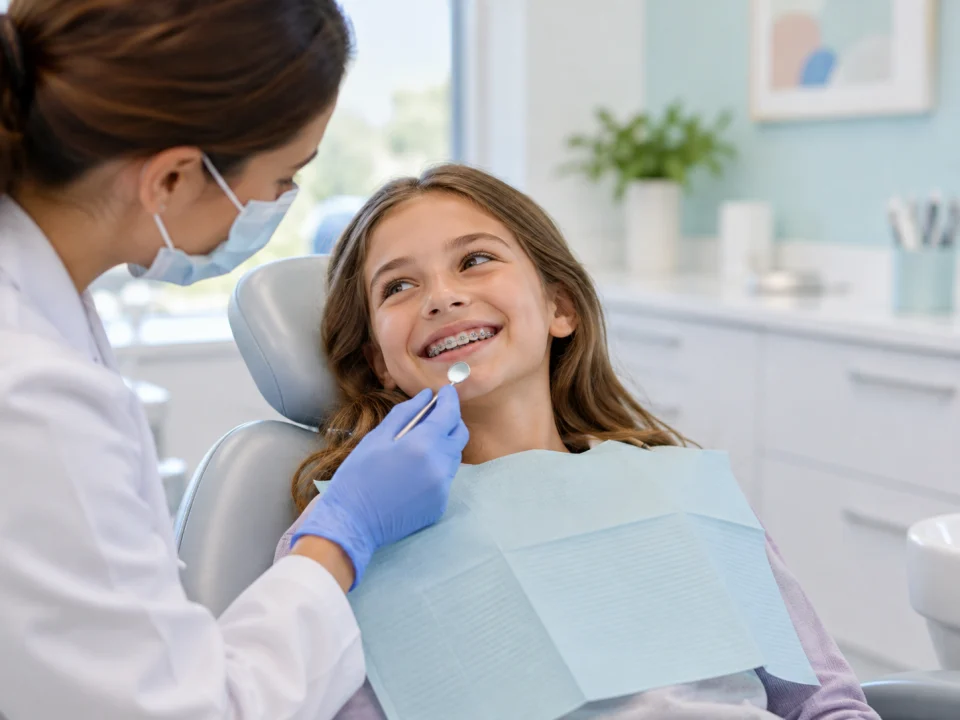
What is orthodontics for children?
During childhood, the teeth, jaws and facial structures continue to develop. The timing of primary tooth loss, the eruption path of permanent teeth, the amount of available space, the relationship between the jaws and the bite are evaluated together.
Orthodontic assessment is not limited to teeth that appear crowded. Chewing and biting function, the ability to maintain oral hygiene, jaw development, early or delayed tooth loss and certain oral habits may also be considered.
Because every child develops at a different rate, monitoring and treatment planning should be personalised.
When should a child have their first orthodontic assessment?
The American Association of Orthodontists recommends that children have their first orthodontic assessment when a problem is noticed and no later than around the age of 7.
At this stage, both primary and permanent teeth may be present, allowing the orthodontist to evaluate tooth eruption, available space and the way the jaws and teeth relate to one another.
The age of 7 does not mean that every child should begin braces treatment at that age. After the first assessment, active treatment may not be required and periodic growth and development monitoring may be recommended instead.
If a significant bite problem, jaw shift, prominent front teeth that may be vulnerable to trauma, or concerns about tooth eruption are noticed earlier, an assessment can be carried out before this age.
Which signs may indicate the need for an orthodontic assessment?
The following findings may be reasons to consider an orthodontic assessment:
- Noticeable crowding or lack of space
- Crossbite, open bite or deep bite
- The lower jaw shifting to one side when closing
- Upper front teeth that appear significantly prominent
- Primary teeth being lost earlier or later than expected
- Permanent teeth failing to erupt, erupting in an unusual position or suspected impaction
- Difficulty chewing or biting
- Noticeable facial or jaw asymmetry
- Prolonged thumb sucking or similar oral habits
- Tooth contacts that interfere with normal bite closure
The presence of one of these findings does not necessarily mean that treatment should begin. The cause of the problem, its effect on development and the most appropriate timing for intervention are determined through clinical assessment.
What is evaluated during a child’s first orthodontic consultation?
During the first consultation, the child’s medical and dental history and the parents’ observations are discussed. The number and eruption stage of the teeth, available space, the relationship between the upper and lower jaws, bite, facial balance and oral hygiene are examined clinically.
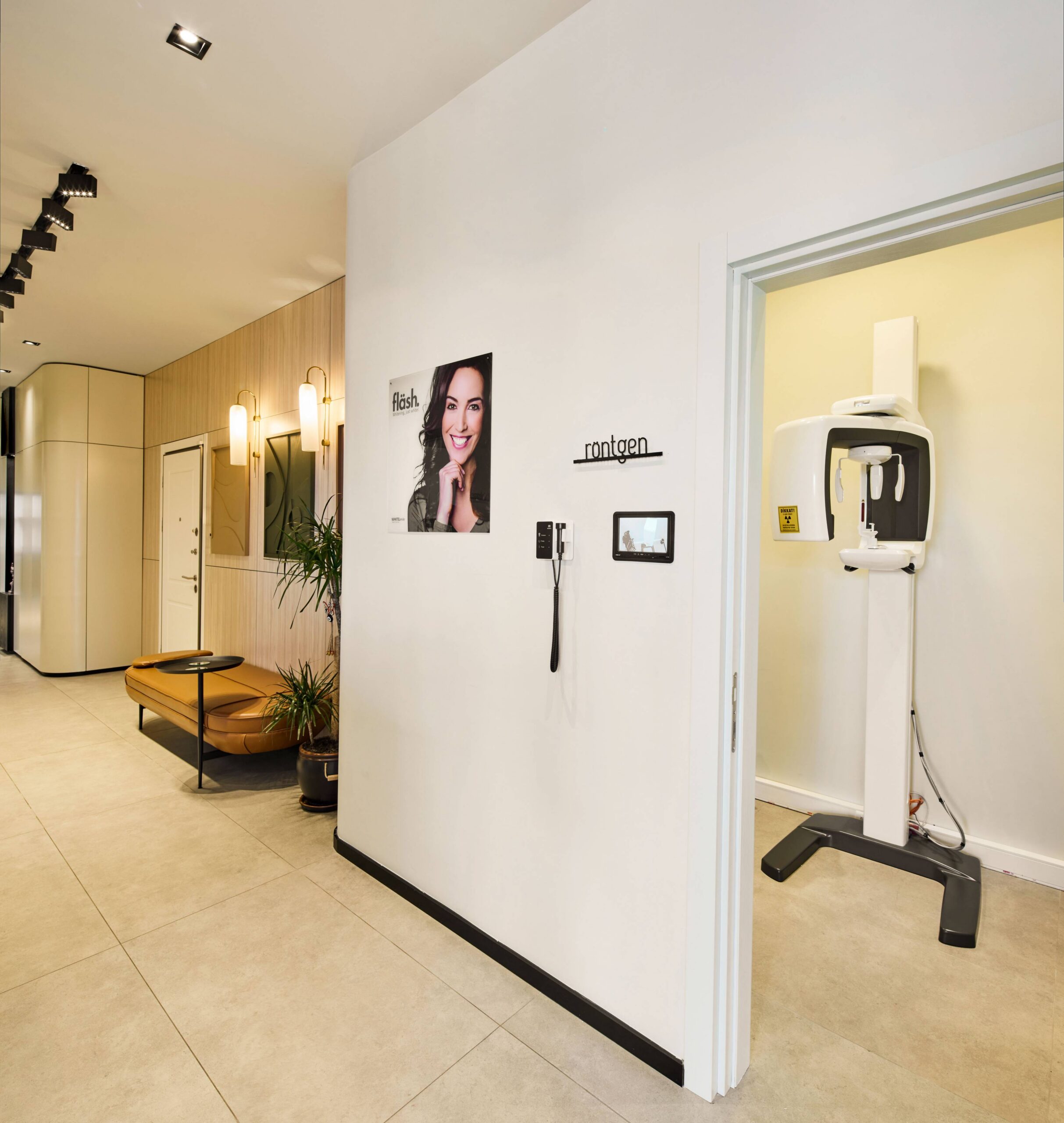
When necessary, intraoral and facial photographs, digital scans or models, and radiographic records may be obtained.
Radiographic examination is not performed at the same time or to the same extent for every child; it is planned according to clinical need.
At the end of the assessment, the parents are informed whether active treatment, monitoring or coordination with another dental discipline may be appropriate.
Why can early orthodontic assessment be important?
Early assessment may allow certain eruption and bite problems that are not yet obvious from the outside to be monitored during growth.
The aim is not to begin treatment unnecessarily early, but to distinguish situations in which intervention may be beneficial from those that can be safely monitored.
In selected children, an early intervention may help guide jaw development, preserve space for permanent teeth or reduce a functional bite shift.
In other children, the most appropriate approach may be to monitor eruption and growth and plan comprehensive treatment at a later stage.

How does the observation period work?
Orthodontic observation appointments may be planned for children who do not require active treatment.
During these visits, loss of primary teeth, eruption of permanent teeth, changes in available space, jaw relationships and facial development are reassessed. The interval between appointments is not the same for every child.
Monitoring can help determine the most appropriate time to begin treatment if treatment later becomes necessary. It can also allow new changes in eruption or bite to be recognised at an appropriate stage.
Being monitored does not mean that orthodontic treatment will definitely be required in the future.
When may early orthodontic treatment be considered?
Early or interceptive orthodontic treatment may be considered for certain problems where treatment during growth may be beneficial.
A crossbite associated with a jaw shift, certain jaw relationship problems, space problems affecting permanent tooth eruption, early loss of primary teeth or prominent front teeth with a higher risk of trauma may be among the situations assessed.
The treatment approach depends on the underlying cause. Removable or fixed appliances, space maintainers, expansion procedures or limited tooth movement may be planned.
Not every early finding requires treatment, and similar-looking problems may need to be managed at different times in different children.
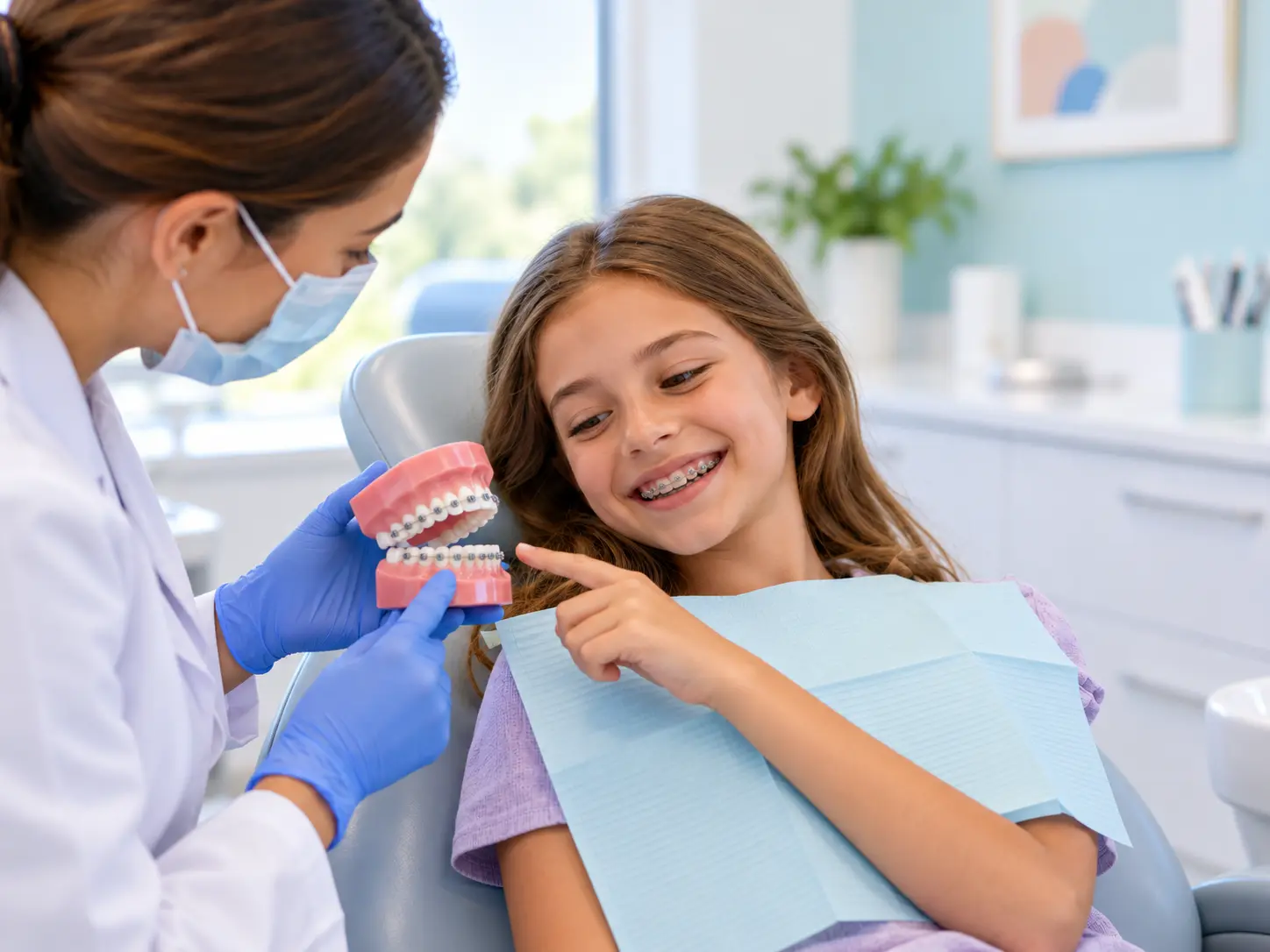
One-phase and two-phase orthodontic treatment
For some children, a single phase of comprehensive orthodontic treatment after most permanent teeth have erupted may be sufficient.
In other situations, a limited first phase may be planned during growth and mixed dentition, followed by a second phase once the permanent dentition has developed further.
The purpose of the first phase is not always to move all teeth into their final positions. The priority may be to manage a specific developmental problem or create more favourable conditions for later treatment.
Families should be informed from the beginning that a child who receives first-phase treatment may still require a second phase later.
Braces treatment for children
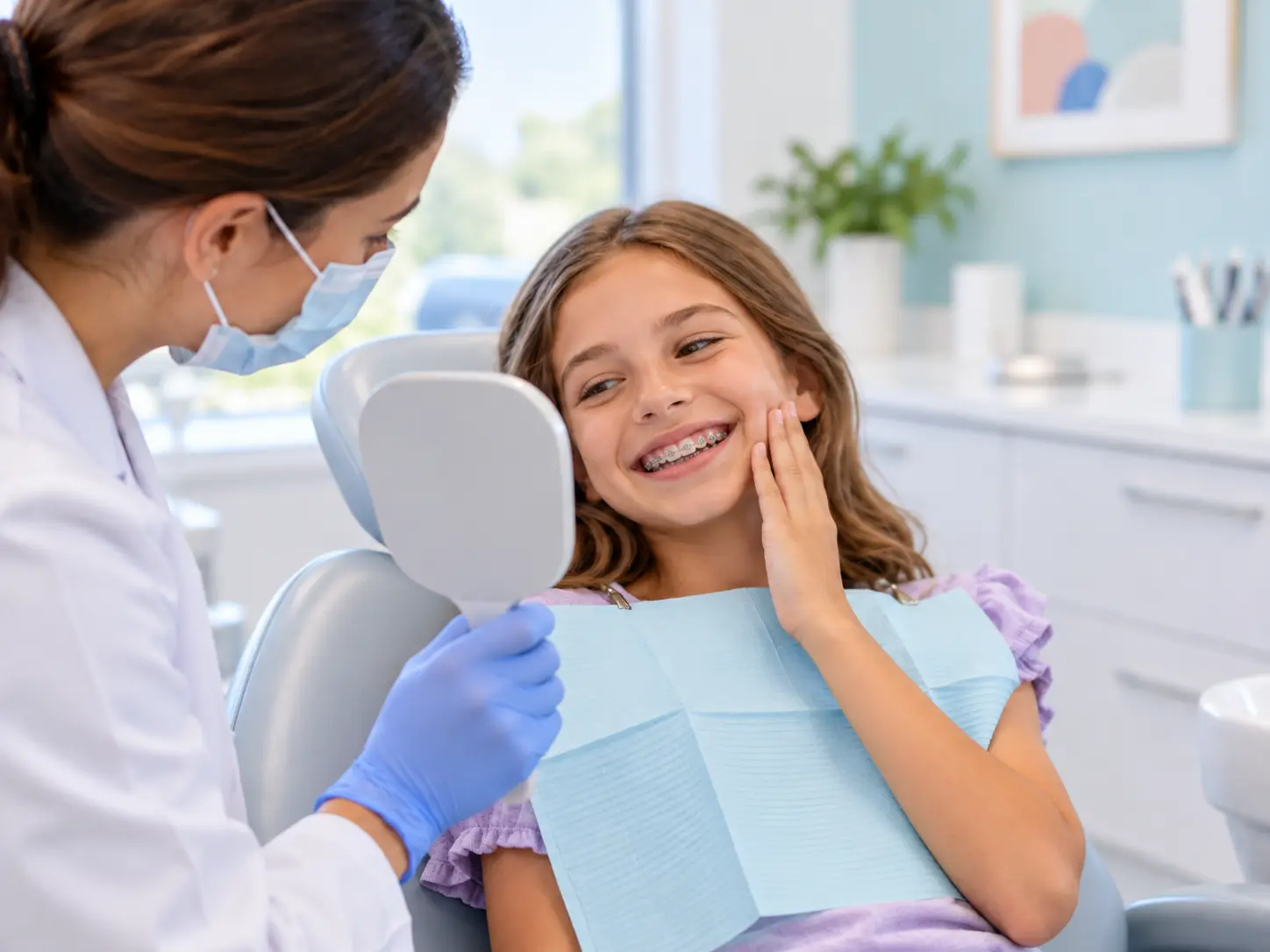
Fixed braces are generally planned when a sufficient number of permanent teeth have erupted and the child is able to maintain appropriate oral hygiene.
Brackets and wires apply controlled forces to the teeth to improve tooth alignment and bite relationships.
The timing of treatment is not based on chronological age alone. Dental development, jaw growth, the extent of the orthodontic problem, oral hygiene and the child’s ability to cooperate with treatment are considered together.
Inadequate cleaning around fixed appliances can increase the risk of tooth decay, gum problems and white spot lesions, so oral hygiene habits are assessed before treatment begins.
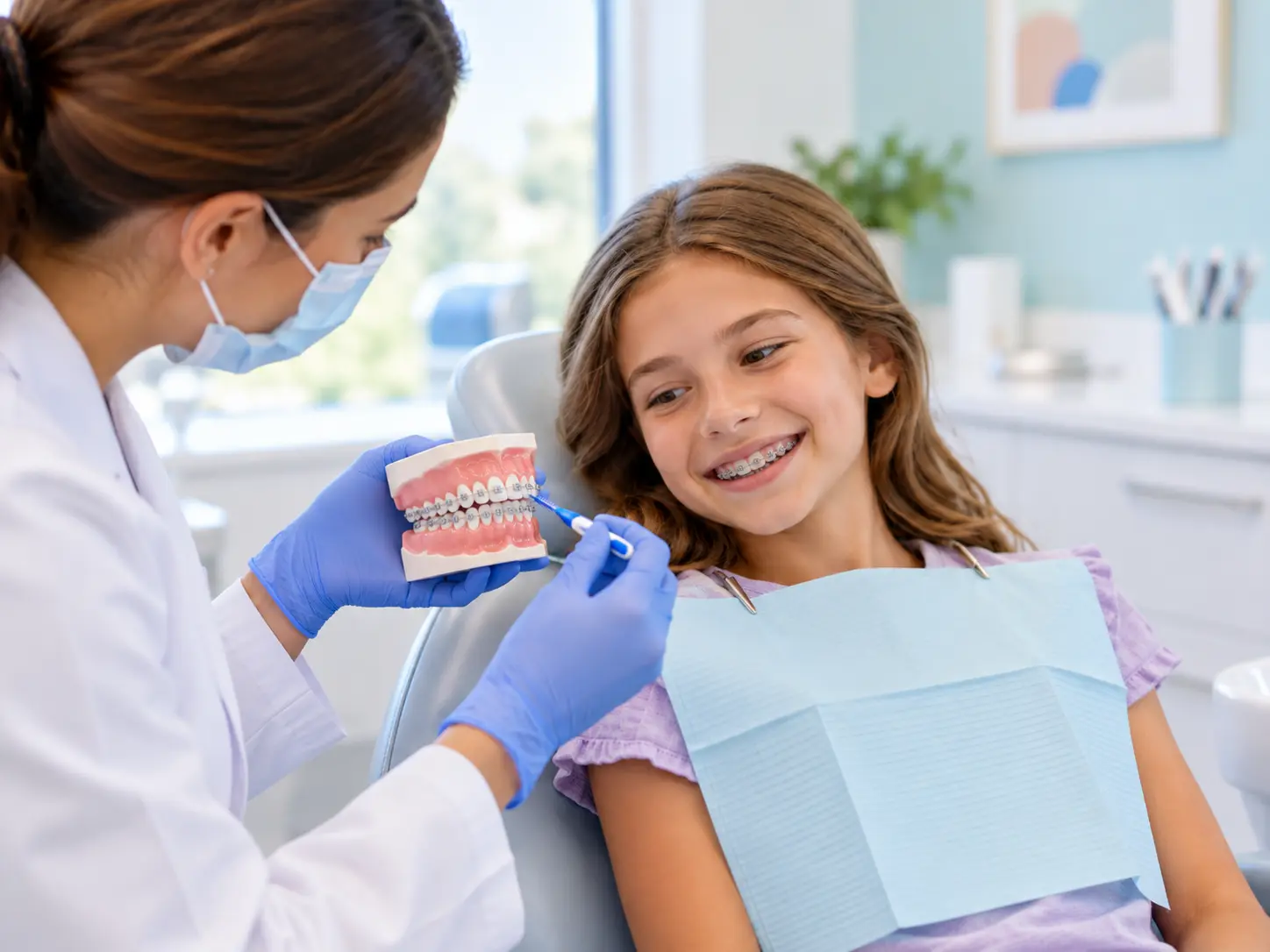
Clear aligner treatment for children
Clear aligners may be considered for some children and teenagers with suitable dental development and orthodontic needs.
Because aligners can be removed, they may make eating and oral hygiene easier; however, they must be worn according to the recommended schedule for the planned tooth movements to occur.
The child’s ability to wear the aligners consistently, keep them safe and follow the treatment routine, together with family support, is important when considering this option.
Not every orthodontic problem can be managed in the same way with clear aligners. Whether fixed braces, clear aligners or another appliance is appropriate is determined after the clinical records have been evaluated.
Thumb sucking, pacifiers and other oral habits
Sucking habits can be a normal part of early childhood.
However, prolonged and frequent thumb sucking, pacifier use or habits such as placing the tongue between the teeth may influence the developing dental arches and bite.
The type, duration, frequency and intensity of the habit should be considered together.
Rather than blaming or worrying the child, an age-appropriate and supportive approach should be used. When necessary, a paediatric dentist, orthodontist and other relevant healthcare professionals may assess the child together.
Early loss of primary teeth and space maintenance
Primary teeth contribute not only to chewing and speech, but also to maintaining space for the permanent teeth that will replace them.
When a primary tooth is lost earlier than expected because of decay, trauma or another reason, neighbouring teeth may sometimes move into the available space.
A space maintainer is not automatically required after every early loss of a primary tooth.
The tooth that was lost, the child’s dental age, the amount of available space, development of the permanent tooth, bite relationships, oral hygiene and the child’s ability to cooperate with an appliance are evaluated together.
Fixed or removable space-maintaining appliances may be considered when clinically appropriate.
The role of the child and family during treatment
Orthodontic treatment for children requires cooperation between the child, family and orthodontist.
Attending review appointments, using appliances as instructed and maintaining good oral hygiene are important parts of treatment.
When removable appliances or elastics are prescribed, the family may have a supportive role in helping the child follow the recommended routine.
Children wearing fixed appliances need to clean carefully around brackets. Hard and sticky foods may damage orthodontic appliances.
If an appliance breaks, is lost, causes irritation or unexpected pain occurs, the clinic should be contacted instead of attempting treatment at home.
What affects treatment duration and cost?
The duration of treatment or monitoring varies according to the child’s dental development, growth stage, the extent of the problem, the selected treatment method and cooperation with treatment.
It is not possible to determine an exact duration based only on age or an oral photograph.
Some children may only require monitoring, while others may need a limited early phase of treatment followed by more comprehensive treatment later.
Cost may be influenced by the extent of diagnosis and treatment, the appliance used, whether the plan involves one or two phases, the follow-up period and any additional requirements.
A final treatment plan and fee information can be provided after clinical assessment and review of the necessary records.
Orthodontics for children in Istanbul, Kadıköy and Caddebostan
At Dr. Esma Kuriş Baştan’s clinic in Caddebostan, children’s dental and jaw development, bite relationships and orthodontic treatment needs are evaluated individually.
The clinic can be reached from Kadıköy, Caddebostan, Suadiye, Erenköy, Bostancı, Göztepe, Kozyatağı, Fenerbahçe and surrounding areas.
During the first consultation, parents’ observations are discussed and the child is assessed according to their stage of development.
If active treatment is not required, an observation plan can be explained. If treatment is recommended, the timing, method and the role of both the child and family are discussed clearly.
Frequently asked questions
At what age should my child first see an orthodontist?
The American Association of Orthodontists recommends an initial orthodontic assessment when a problem is noticed and no later than around age 7. If a significant bite problem, jaw shift or concern about tooth eruption is noticed earlier, there is no need to wait until that age.
Does every child who is assessed at age 7 need treatment?
No. Early assessment is often intended to evaluate development and determine appropriate monitoring intervals. Active treatment is planned only when there is a clinical need and the timing is considered appropriate for the child.
Can orthodontic treatment be carried out while primary teeth are still present?
Limited early treatment may be considered for certain bite, jaw development or space problems while primary teeth are still present. In many children, however, monitoring the eruption of permanent teeth may be more appropriate. The decision depends on the type of problem and the child’s development.
Can a crossbite in a child correct itself?
Some temporary bite changes may alter during development, but crossbites associated with a jaw shift should be assessed. It is preferable not to assume that the problem will correct itself without a clinical examination.
Is braces treatment painful for children?
Temporary pressure or sensitivity may occur after brackets or orthodontic appliances are fitted. The level of discomfort varies between children. The clinic should be contacted if pain is severe, unexpected or persistent.
If my child has early treatment, will braces be needed again later?
They may be. Early treatment is usually intended to manage a specific developmental problem. Once all permanent teeth have erupted, a comprehensive second phase of treatment may still be required. This possibility should be discussed with the family during initial treatment planning.
A personalised orthodontic assessment for your child
Whether your child’s dental and jaw development is progressing appropriately for their age is assessed through clinical examination, growth evaluation and the necessary diagnostic records.
You can contact our clinic to learn more about the first orthodontic assessment, monitoring or treatment options for your child.
Contact & Appointment Get Information via WhatsAppThe information on this page is provided for general informational purposes and does not replace a clinical examination, diagnosis or personalised treatment recommendation for your child.
