
Dental & Orthodontic Care in Istanbul
At our clinic in Caddebostan, Istanbul, dental and orthodontic needs are evaluated with an individual approach. Orthodontics, Invisalign clear aligners, dental implants, oral surgery and restorative treatment planning can be considered separately or, when a case involves more than one field, within a coordinated clinical plan.
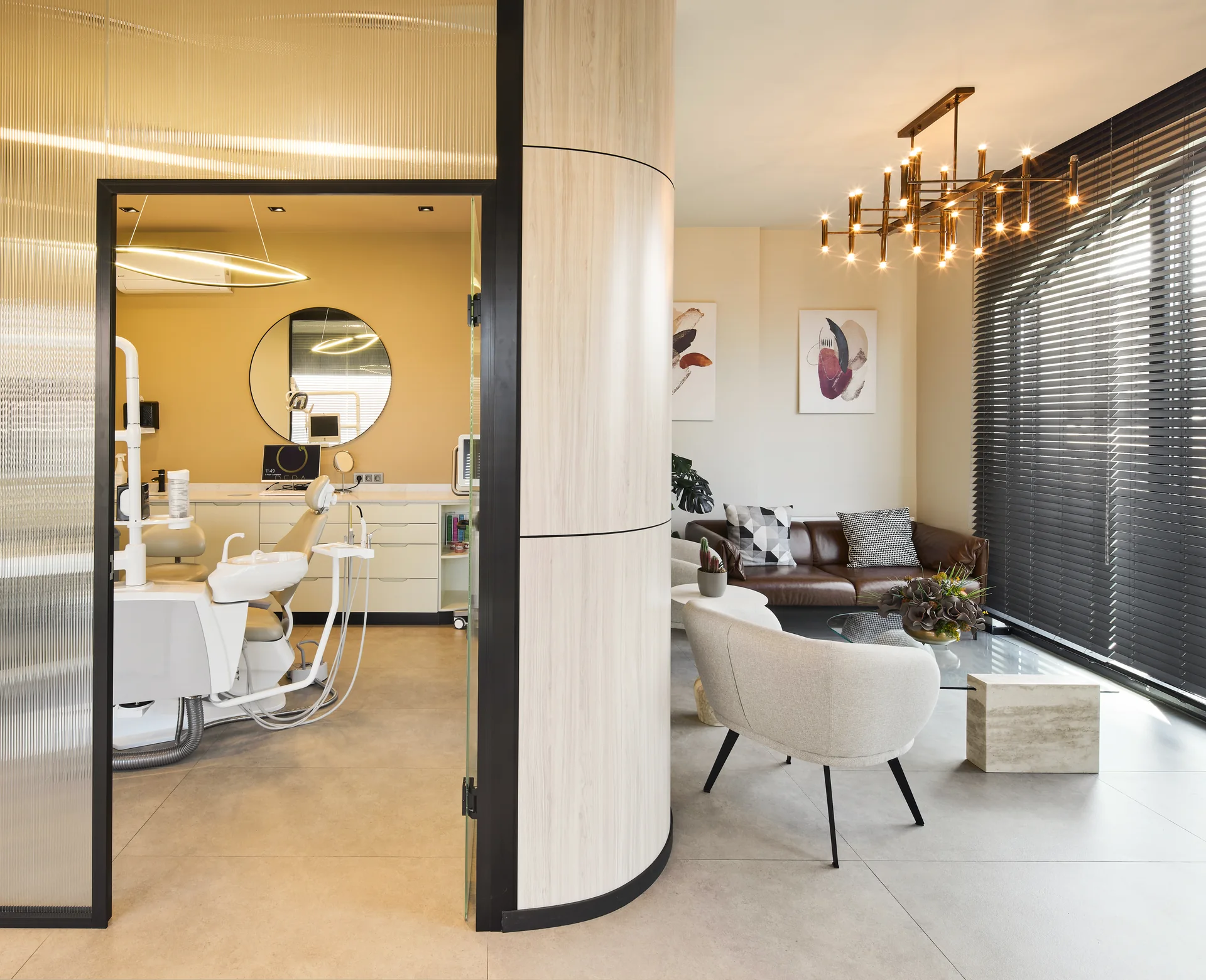
Planning dental treatment in Istanbul
A useful treatment plan starts with understanding the whole dental situation rather than selecting a procedure from a list. Existing teeth, gum and bone health, missing teeth, tooth alignment, bite relationships, previous dental work and the patient’s expectations may all influence which options should be considered.
Some patients need treatment in only one area of dentistry. Others may have a combination of concerns, such as missing teeth together with crowding, a bite problem together with worn restorations, or insufficient bone in an area where an implant is being considered.
For this reason, the sequence of treatment can be as important as the treatment itself. A definitive diagnosis, treatment method and expected timeline can only be established after an appropriate clinical examination and review of the necessary diagnostic records.
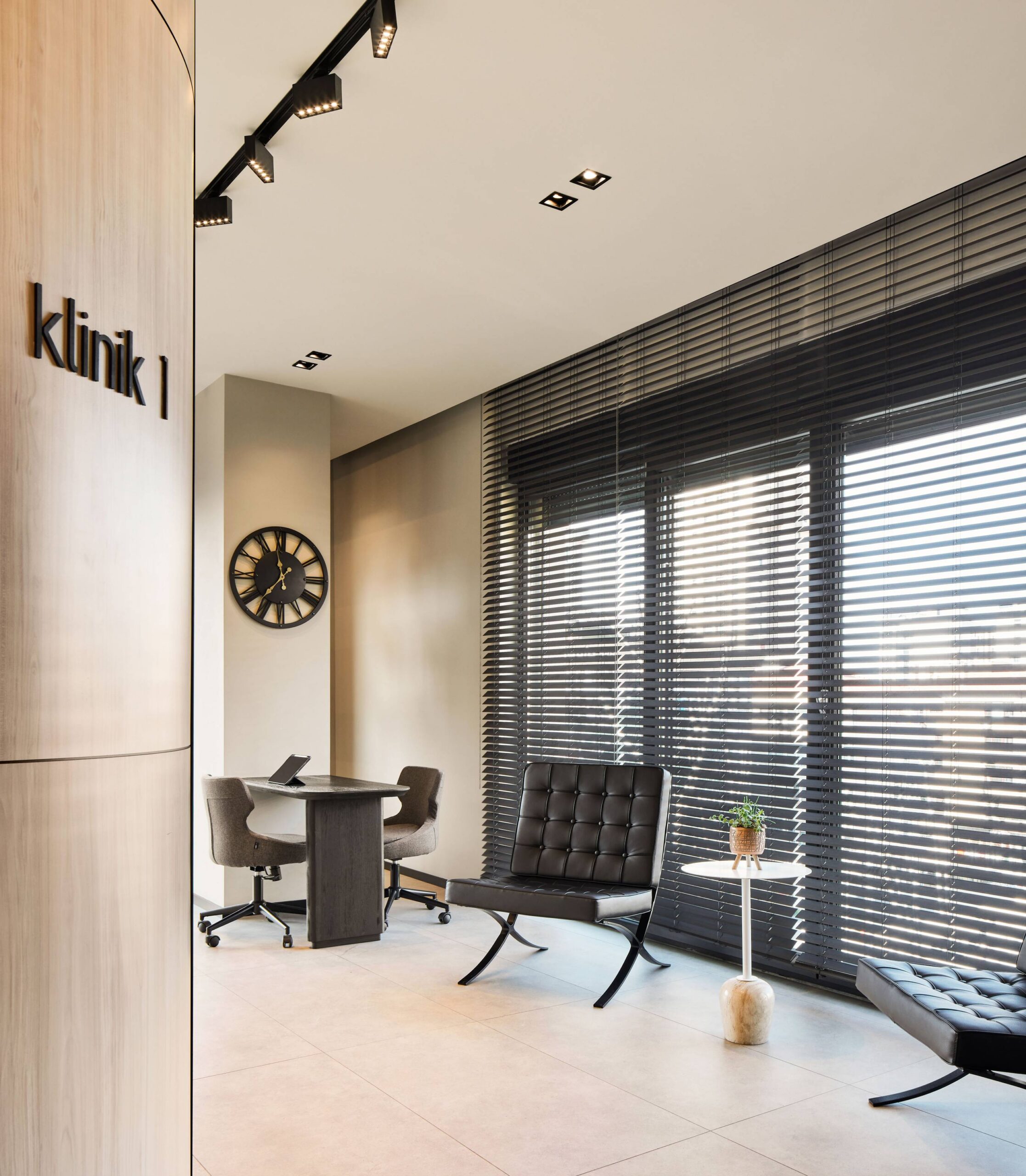
Two complementary areas of dental care
The clinic brings together two complementary areas of dentistry. Orthodontist Dr. Esma Kuriş Baştan focuses on tooth alignment, bite and jaw relationships, clear aligner treatment and orthodontic planning. Dr. Ali İlker Baştan works in implant dentistry, oral and maxillofacial surgery, hard- and soft-tissue reconstruction and implant-supported rehabilitation.
When a patient’s needs involve more than one field, the relevant findings can be considered together before the sequence of care is determined. This may be particularly important when orthodontic tooth movement affects the space available for an implant, when bite relationships influence a final restoration, or when bone and soft-tissue conditions affect the timing of treatment.
Coordinated planning does not mean that every patient needs several procedures. The aim is to identify which parts of the dental situation are related and which, if any, need to be addressed before another stage can begin.
Orthodontic care with Dr. Esma Kuriş Baştan
Dr. Esma Kuriş Baştan graduated from Istanbul University Faculty of Dentistry and completed her orthodontic education at New York University College of Dentistry between 2004 and 2006. Her clinical work includes orthodontic evaluation and treatment planning for children, teenagers and adults.
Depending on the individual diagnosis, orthodontic care may involve Invisalign or other clear aligner systems, fixed braces, children’s orthodontics, functional orthodontic approaches during growth, evaluation of bite relationships, orthodontic assessment in patients with temporomandibular joint concerns, and orthodontic planning associated with orthognathic treatment.
Treatment selection is not based on appearance alone. Tooth position, bite, jaw relationships, periodontal health, the amount and direction of tooth movement required and the patient’s ability to attend appropriate follow-up visits are considered together.
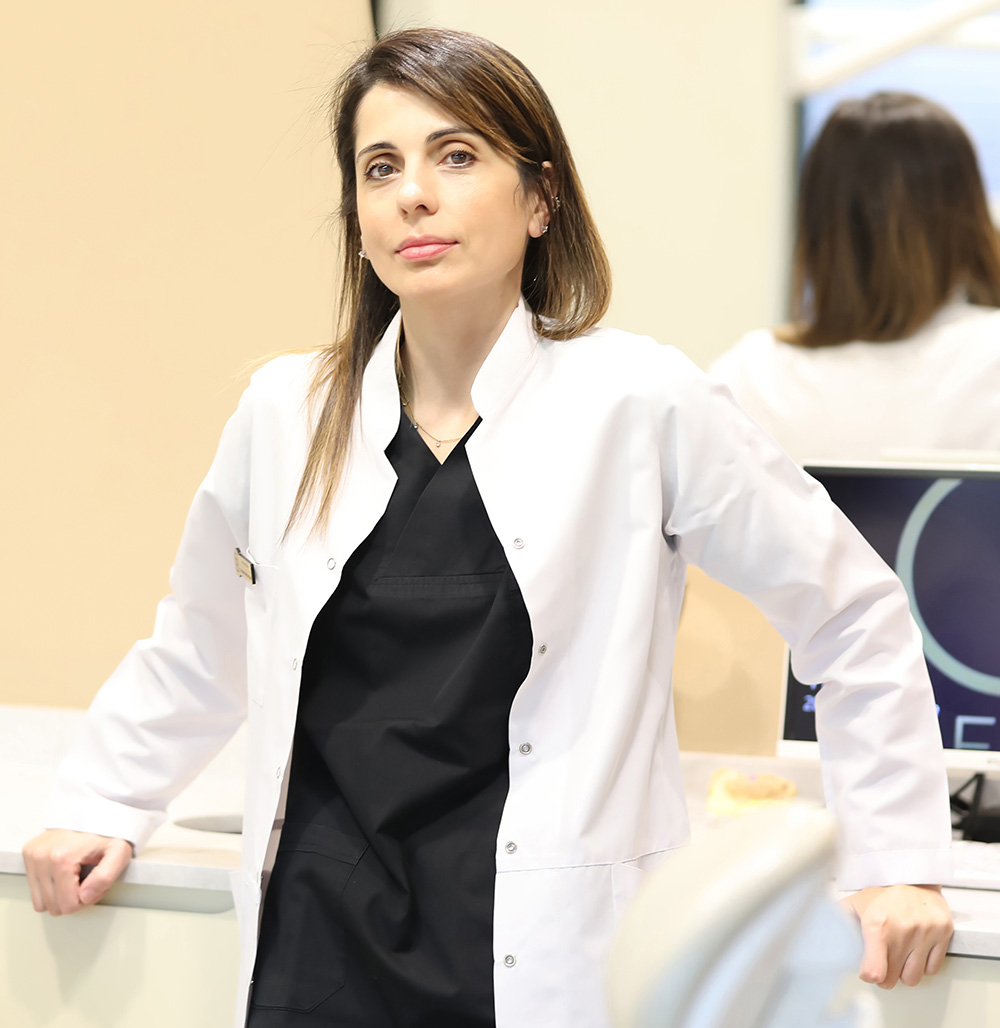
Implant dentistry and oral surgery with Dr. Ali İlker Baştan
Dr. Ali İlker Baştan graduated from Istanbul University Faculty of Dentistry, completed a master’s degree in Oral Implantology at Yeditepe University and later completed a PhD programme in Oral and Maxillofacial Surgery at Ondokuz Mayıs University. His clinical work includes implant surgery, implant-supported prosthetic planning and surgical management of hard- and soft-tissue conditions.
Depending on the clinical findings, implant-related planning may include a single implant, multiple implants, full-arch implant-supported rehabilitation, bone grafting, sinus lifting or other reconstructive approaches. The number and position of implants are determined according to anatomy, available bone, bite forces, remaining teeth and the requirements of the planned restoration.
Implant treatment is not automatically the first option for every missing or compromised tooth. The condition and long-term maintainability of natural teeth, periodontal support, bone anatomy and the overall treatment plan should be evaluated before deciding on extraction or implant placement.
When treatment requires more than one approach
Dental problems do not always occur independently. Tooth position can affect the space available for a future implant; the location of an implant can affect later orthodontic options; bite relationships can influence how a crown or implant-supported restoration functions; and bone or gum conditions can affect when orthodontic or surgical treatment should begin.
Missing teeth and crowded teeth
In selected cases, orthodontic treatment may be used to create, maintain or redistribute space before an implant or other restoration is considered. In other cases, closing a space orthodontically may be an alternative. The appropriate direction depends on the bite, tooth positions, bone conditions and overall treatment goals.
Bite problems and missing teeth
Replacing a missing tooth without considering the surrounding bite may leave important functional questions unanswered. When relevant, tooth alignment, opposing teeth, available restorative space and the forces expected on the final restoration can be reviewed together.
Orthodontics before restorative treatment
Moving teeth before crowns, bridges or implant-supported restorations are completed can sometimes provide a more appropriate position for the final restorative stage. Whether this is useful must be assessed individually.

Dental implant evaluation in Istanbul
Dental implants may be considered when one or more teeth are missing and the surrounding clinical conditions are suitable. Evaluation involves more than measuring the visible gap. The condition of neighbouring teeth, gum health, bone height and width, anatomical structures, bite forces and the design of the final restoration may all influence planning.
A panoramic radiograph can provide an overview, while three-dimensional CBCT imaging may be required when more detailed assessment of bone volume, sinus anatomy, nerve position or a complex surgical site is needed. The type of imaging is selected according to the clinical question that needs to be answered.
If available bone is insufficient for the proposed implant position, procedures such as guided bone regeneration, bone grafting or sinus lifting may be considered in appropriate cases. These procedures are not required for every implant patient, and their need can only be determined after examination and imaging.
·
Full-arch and complex implant rehabilitation
Patients who have lost most or all teeth in one jaw, or whose remaining teeth have a poor long-term prognosis, may need an evaluation of full-arch treatment options. Depending on anatomy and prosthetic requirements, these options can include implant-supported fixed restorations using different implant distributions.
All-on-4 and All-on-6 are two possible configurations, but a higher number of implants is not automatically better and the same design is not suitable for every jaw. The available bone, implant distribution, bite forces, opposing teeth, cleaning access and the design of the final prosthesis all need to be considered.
In patients with substantial bone loss, additional reconstruction or a different implant strategy may be required. Conversely, when natural teeth can be maintained with a reasonable long-term prognosis, preserving those teeth may form part of the treatment discussion.
·

Invisalign and clear aligner treatment
Invisalign is one of the systems used for clear aligner orthodontic treatment. A series of removable aligners is planned to move teeth in controlled stages according to the patient’s diagnostic records and treatment goals.
Clear aligners may be considered for different types of crowding, spacing and bite concerns, but they are not automatically suitable for every orthodontic problem. Tooth position, jaw relationships, gum and bone health, the movements required and patient cooperation all influence whether clear aligners are an appropriate option.
For patients who live outside Istanbul, follow-up planning is particularly important. Orthodontic treatment extends over time and requires appropriate clinical monitoring. The expected appointment schedule, how progress will be assessed and what should happen if an unplanned problem occurs should be discussed before treatment begins.
Learn more about Invisalign treatment · Learn more about braces
Restorative dentistry as part of the overall plan
Restorative treatment may be required to repair damaged teeth, replace missing tooth structure or complete the final stage of a broader dental plan. Depending on the clinical situation, this may involve fillings, inlays or onlays, crowns, bridges, implant-supported restorations, veneers or other restorative approaches.
When orthodontics or implant treatment is also being considered, timing matters. A definitive crown or bridge placed too early can limit later tooth movement, while the position of an implant cannot be changed orthodontically after it has integrated with the bone. For this reason, the final restorative goal may need to be discussed before the earlier stages are completed.
Aesthetic preferences can form part of treatment planning, but they should be considered together with tooth preservation, periodontal health, bite function, material requirements and long-term maintenance.
What information is useful before your appointment?
If you have had previous dental treatment, existing records can help provide context for the first discussion. Depending on your situation, useful information may include recent dental X-rays, a CBCT scan if one has already been taken, previous implant records, orthodontic records, photographs, details of previous dental procedures and a list of current medications or relevant health conditions.
You do not need to arrange new imaging solely for the purpose of contacting the clinic unless you have been specifically advised to do so. Existing records can be reviewed as background information, while any additional diagnostic records should be selected according to the findings of the clinical evaluation.
Photographs and previous records can help clarify what questions should be discussed, but they cannot replace an in-person examination. A definitive diagnosis, suitability decision, treatment sequence and final treatment plan require appropriate clinical assessment.
How many visits to Istanbul may be required?
The number of appointments depends on the type of treatment, healing requirements and the individual clinical plan. It is not possible to determine an accurate number of visits from the treatment name alone.
Implant treatment
Implant care may involve separate stages for examination and imaging, surgery, healing, review and final prosthetic treatment. Bone grafting, sinus lifting, extractions or complex reconstruction can change the sequence and the interval between stages.
Orthodontic treatment
Invisalign and fixed braces are longitudinal treatments that require monitoring over time. Patients who live abroad should discuss the expected review interval and practical follow-up requirements before beginning treatment.
Restorative treatment
The number of appointments for crowns, bridges and other restorative procedures varies according to the number of teeth involved, whether preliminary treatment is required and how the restorative stage relates to orthodontic or implant care.
What if you live outside Turkey?
People living in the United Kingdom, Ireland, Germany, Russia and other countries may have practical questions that are different from those of a patient living in Istanbul. These may include how many in-person appointments are likely to be required, how long healing stages may take, what type of follow-up is needed after returning home and which records should be kept for future dental care.
Before deciding to begin treatment away from home, it is useful to understand the expected treatment sequence rather than focusing only on the first appointment. Ask how each stage will be reviewed, whether a return visit is likely to be required, which symptoms would require an in-person assessment and what information should be shared with a local dentist if care is needed after returning home.
Remote communication may be useful for general questions and for discussing existing records, but it does not replace clinical examination when an in-person assessment is required. Urgent dental or medical problems should be assessed by an appropriate healthcare professional where the patient is located.
Our clinic in Caddebostan, Kadıköy
The clinic is located in Caddebostan on the Asian side of Istanbul, close to Bağdat Avenue. The area is part of Kadıköy and is connected with the wider Istanbul transport network.
Address:
Caddebostan Mahallesi, Bağdat Caddesi, Kantarcı Rıza Sokak, Seyran Apartmanı No: 1, Floor: 4, Apartment: 7, Kadıköy / Istanbul / Turkey
Clinic:
+90 505 418 33 11
WhatsApp:
+90 505 418 33 11
Email:
merhaba@esmakuris.com
Dr. Esma Kuriş Baştan and Dr. Ali İlker Baştan
Dr. Esma Kuriş Baştan · Orthodontist
Dr. Esma Kuriş Baştan graduated from Istanbul University Faculty of Dentistry in 2000 and completed her orthodontic education at New York University College of Dentistry between 2004 and 2006. She received Invisalign provider certification during her NYU training and later worked in an orthodontic practice in Manhattan before continuing her clinical work in Istanbul.
Her professional interests include clear aligner treatment, fixed orthodontics, children’s orthodontics, functional orthodontics, bite and jaw relationships, TMD-related orthodontic assessment and orthodontic planning associated with orthognathic treatment.
Dr. Ali İlker Baştan · DDS, MSc, PhD
Dr. Ali İlker Baştan graduated from Istanbul University Faculty of Dentistry, completed postgraduate education in Oral Implantology at Yeditepe University and a PhD programme in Oral and Maxillofacial Surgery at Ondokuz Mayıs University. His clinical work includes implant surgery, implant-supported rehabilitation and hard- and soft-tissue reconstruction.
In cases where orthodontic, surgical and restorative factors affect one another, the relevant findings can be reviewed as part of a coordinated treatment-planning process.
Frequently asked questions
Can orthodontic treatment and dental implants be planned together?
They can be part of the same overall treatment plan in appropriate cases, but treatment order is important. Natural teeth can be moved orthodontically, whereas an integrated dental implant does not move in the same way. Implant space, tooth positions, bite and the final restoration may therefore need to be planned before implant placement.
Can I have Invisalign if I already have a dental implant?
Existing implants do not automatically prevent clear aligner treatment, but the implant itself cannot be moved like a natural tooth. The position of the implant, the surrounding teeth and the movements required need to be assessed before an orthodontic plan is made.
Should braces or Invisalign be completed before an implant is placed?
In some cases orthodontic tooth movement is completed before implant placement so that the final implant space can be established accurately. In other situations, a different sequence may be appropriate. The decision depends on the individual diagnosis and restorative goal.
Can I send existing X-rays before travelling to Istanbul?
If you already have recent dental X-rays or previous treatment records, you can mention them when contacting the clinic. Existing records may provide useful background information, although additional examination or imaging may still be required before a definitive plan can be made.
Do dental implants always require bone grafting?
No. Bone grafting is considered when available bone is insufficient for the intended implant position or when additional tissue support is required. Whether grafting is needed depends on examination and imaging findings.
What is the difference between All-on-4 and All-on-6?
The main numerical difference is the number of implants supporting a full-arch restoration, but the choice should not be made by implant count alone. Bone distribution, anatomical limitations, bite forces and prosthetic design influence which configuration may be appropriate.
Can implant treatment be completed in one trip?
Not in every case. Implant treatment may include surgical, healing and restorative stages. The number and timing of visits depend on the treatment plan, implant stability, healing response and whether additional procedures such as grafting are required.
Can I start Invisalign in Istanbul if I live in the UK, Ireland, Germany or another country?
Living abroad does not by itself determine suitability for Invisalign. Because orthodontic treatment requires monitoring over time, the expected appointment schedule and follow-up requirements should be discussed before treatment begins.
How long should I stay in Istanbul for dental treatment?
There is no single stay length that applies to all procedures. The necessary time depends on the treatment performed, whether surgery is involved, early healing and when an in-person review is clinically appropriate. An individual schedule can only be discussed after the treatment requirements are known.
Can damaged natural teeth be kept instead of replaced with implants?
In appropriate cases, preserving maintainable natural teeth may be preferable to extraction and implant placement. The prognosis of each tooth, periodontal support, restorative options and the wider treatment plan need to be considered individually.
Do I need a referral before requesting an appointment?
You may contact the clinic directly to request an appointment. If another dentist or orthodontist has already provided records or a treatment summary, bringing those records may help provide additional clinical context.
Can a final treatment plan be prepared from photographs alone?
Photographs may help explain a concern, but they do not provide enough information for a definitive diagnosis or treatment plan. Clinical examination and appropriate diagnostic records are required to assess teeth, supporting tissues, bite and bone anatomy.
Have a question about your dental treatment?
If you are considering dental or orthodontic treatment in Istanbul, you can contact the clinic with your questions and request an appointment for an individual evaluation.
If you already have recent dental imaging, previous implant information, orthodontic records or a treatment summary from another clinician, you may mention this when contacting the clinic. The team can advise which existing records may be useful to bring to your appointment.
Request an appointment · Ask a question via WhatsApp
The information on this page is provided for general informational purposes. It does not replace a clinical examination, diagnosis or an individual treatment recommendation. Treatment suitability, sequence, duration and follow-up requirements vary according to individual clinical findings.

A coordinated view of your dental needs.
Orthodontic alignment, missing teeth, bone conditions, bite relationships and final restorations can sometimes influence one another. When more than one area of dentistry is relevant, planning the sequence carefully can help clarify the available options.
Contact the clinic to request an appointment with Dr. Esma Kuriş Baştan or Dr. Ali İlker Baştan and discuss which type of evaluation is appropriate for your concerns.
Contact & Appointment Ask via WhatsAppThe information on this page is general and educational. Individual diagnosis and treatment planning require an appropriate clinical examination and diagnostic records.
